Thirty Years of Nanoparticle Patent Prosecution and What Olfactory CNS Claim Continuations Actually Protect
Continuation claims can lock in route, payload, and target, within limits.
Nanoparticle nose-to-brain delivery for CNS peptide indications uses olfactory and trigeminal pathways to target the brain without relying on passage across the blood-brain barrier from systemic circulation. Its patent significance extends beyond particle chemistry. Continuation claims can protect delivery route, peptide payload class, and neurological targets together, but their durability depends on the original disclosure, consistent prosecution, and remaining patent term.
Why injectable GLP-1 delivery creates a structural compliance problem that reformulation alone cannot fix
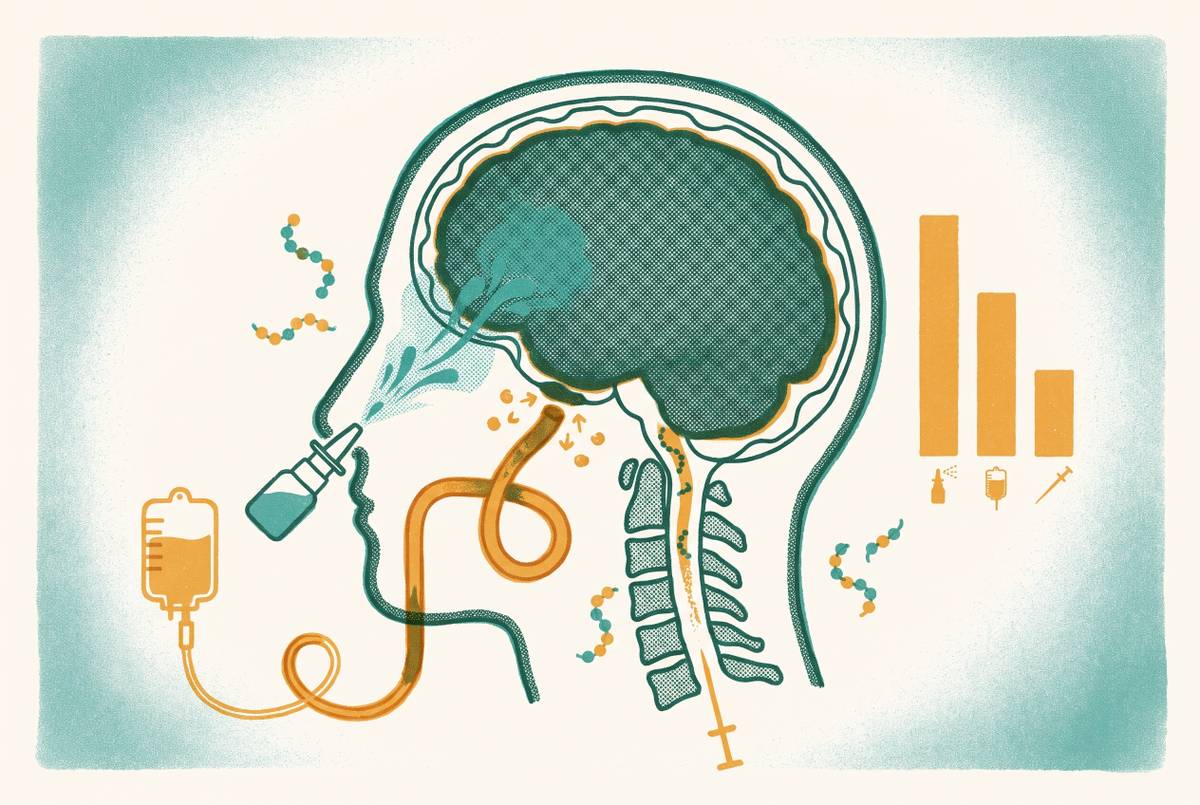
GLP-1 receptor agonists suppress appetite, slow gastric emptying, boost insulin secretion, and reduce glucagon. Their mechanism is established. It remains unresolved whether patients can sustain treatment long enough to benefit, and whether administration reaches the intended therapeutic destination. Even a molecule that works cannot solve either problem on its own.
The ICER draft report documents GI side-effect rates substantially higher than placebo, with severe events in a meaningful fraction of treated patients. Evernorth Research Institute identifies side effects and safety concerns as the leading patient-cited reason among those who stop treatment. These findings establish a substantial treatment burden. They do not, however, isolate the injection requirement as the cause of discontinuation or demonstrate that nasal delivery would remove those adverse effects.
That distinction frames the commercial stakes without overstating them. Reformulation that preserves systemic injection does not remove the requirement to inject, while changing the route raises separate questions about exposure and tolerability. For CNS indications, the destination adds another constraint. Delivery therefore requires engineering beyond a search for another version of the same molecule.
What the olfactory and trigeminal pathways offer that systemic injection cannot — and where the evidence is still unsettled
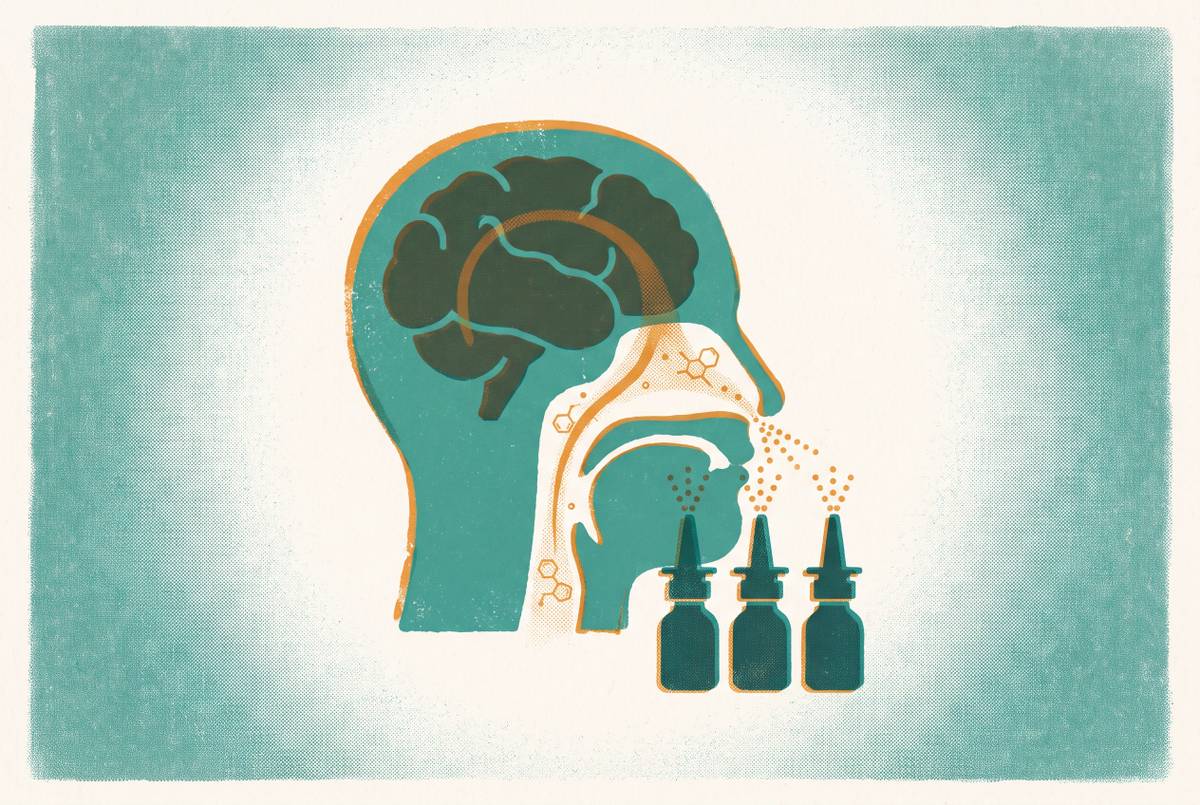
How can large-molecule peptides reach the brain through the nose? Olfactory and trigeminal pathways connect the nasal epithelium with the CNS, offering routes that bypass the blood-brain barrier. This is an anatomical distinction. Increasing an injected dose does not reproduce that route, even when the injected and intranasal products contain the same active agent.
Preclinical research provides a reason to investigate it. A 2025 study identified in PMC found that intranasal GLP-1RAs rapidly accumulated in the hippocampus and neocortex in rodent models, with highest uptake within 30 minutes in both wild-type and Alzheimer's model mice. Nanocarrier research also includes cell-penetrating peptide-conjugated GLP-1 nanoparticles showing rapid CNS effects in animals. Those observations support biological plausibility.
Negative clinical trial results remain part of the argument. They cannot simply be dismissed as failures of systemic delivery, because an unsuccessful clinical outcome does not by itself establish inadequate exposure at the relevant brain targets. At the same time, failure through systemic administration leaves open whether delivery through a different anatomical pathway could work.
It therefore remains to be shown whether intranasal administration gets enough active peptide to the relevant CNS destination to benefit patients. Animal uptake and human efficacy are different endpoints. Route-specific patent claims draw on this difference in delivery, but the claims alone cannot show whether it works in patients. Route specificity is nevertheless a real biological variable with legal significance, rather than merely a different description of a formulation.
How continuation filings create layered claim stacks that outlast the science that inspired them
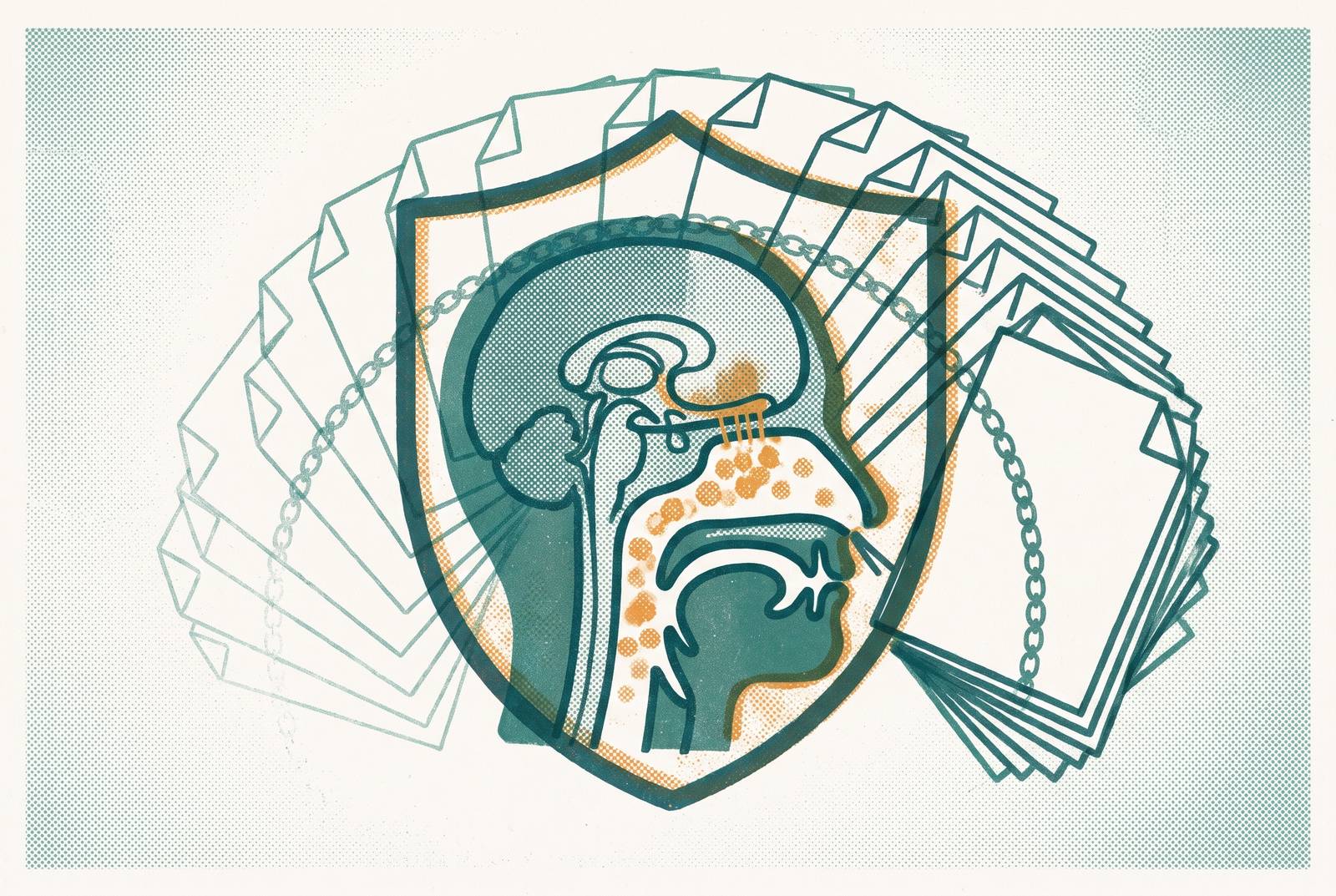
A continuation lets an applicant seek different claims with the same disclosure as an earlier application and keep the earlier priority date for subject matter that the disclosure supports. Timing is essential to that continuity. The continuation must be filed before the parent issues or is abandoned, so a chain depends on maintaining a pending application rather than reopening a closed filing whenever a market becomes attractive.
The disclosure describes the invention, while the claims define the protection sought. An early disclosure of nasal nanoparticle delivery can thus support later claims to embodiments that have a market, as long as the original material supports them. New claim wording cannot add technical content that the disclosure lacks.
A representative family covering chitosan and polyglutamic acid nanoparticles illustrates this structure. Its disclosure includes bioactive agents delivered through oral or nasal absorption, and multiple children seek claim sets with different angles over roughly half a decade. Related patents address protein drug delivery specifically. This is a useful architectural example, but it is not evidence of a thirty-year olfactory CNS family.
An open continuation can also permit claim amendment as competitor products emerge, again within the original disclosure. That adaptability has a firm temporal limit. The Lemelson era's 17-year-from-issue rule is gone, and modern continuation terms run from the original filing date. Thirty years of prosecution history must not be confused with thirty additional years of enforceable exclusivity.
A disclosure may precede a viable market, while claims are prosecuted as therapeutic applications become clearer. Continuations let claim architecture develop with the market only as far as disclosure support and patent term allow.
What olfactory CNS claim continuations specifically lock in that A61K formulation claims cannot
A61K identifies medicinal preparations and helps place a patent in a category, while the claims define what conduct its protection covers. The same caution applies to the B82Y nanotechnology subclass. Neither label establishes whether a patent protects particle structure, administration route, biological cargo, or a therapeutic destination.
The operative distinction lies in three claim dimensions, which are route, payload, and target. Route-specific language can require administration through an olfactory or trigeminal pathway rather than merely describe a nanoparticle suitable for administration. That limitation changes the boundary. An injectable product would not meet an intranasal-route requirement, while changing particle chemistry would not necessarily avoid a claim whose other limitations still cover the resulting intranasal product.
Payload language defines a different boundary. A claim directed to peptide or protein bioactive agents can cover a class without naming every individual member, if the disclosure supports that breadth. The chitosan and polyglutamic acid family illustrates the distinction between claims involving bioactive agents and claims specifically addressing protein delivery. It does not establish that every peptide delivered nasally falls within those claims.
Neurological target language adds the third dimension. A claim may recite CNS delivery or specify destinations such as the hippocampus, cortex, or mesolimbic pathways. Such language can distinguish a CNS-directed invention from one concerned only with formulation chemistry. Its effect still depends on the complete claim, including any structural restrictions retained from the underlying nanoparticle invention.
What, then, does a novel formulation actually buy? A late entrant could obtain protection for a new LNP formulation without thereby gaining freedom to practise every route, payload, and target combination in which it might be used. Patentability and permission to operate are different questions. Conversely, an earlier route-specific claim does not automatically capture that formulation unless all its limitations are met and the claim remains valid and enforceable.
Layering these dimensions across a family can make design-around more difficult than altering one ingredient. The protection comes from overlapping claim requirements, however. A decades-old disclosure is commercially consequential only where supported, unexpired claims still reach the product under consideration.
The concentration of ownership in this patent landscape and what the filing slowdown means for new entrants
The extrahepatic and CNS-targeted nanoparticle landscape is described as concentrated at the top, with a more dispersed long tail. That distribution suggests unequal starting positions. Holders of established families may have several claim layers available, while a new entrant may control only a narrower formulation or application. The available material does not supply an owner-by-owner breakdown sufficient to rank those positions.
Filing trends also differ by subfield. Annual LNP targeting filings grew sharply from 2021 to 2024, whereas extrahepatic nanoparticle delivery filings peaked in 2017 and declined substantially through 2024. Growth in one category does not establish an equivalent filing race in olfactory CNS delivery, and contraction in the broader extrahepatic category does not prove that its olfactory segment is clear.
Publication introduces another limit on interpretation. Applications generally become public roughly 18 months after filing, so the counts for 2025 and 2026 are still incomplete. Apparent quiet is not evidence of abandonment. A lower filing rate may offer a well-positioned academic spinout more room to establish a position, but the existing claims remain more consequential than the number of recent applications.
For an entrant with a continuation family rooted in pre-2010 priority, the useful asset is supported early subject matter. Fewer recent filings may mean fewer new competing positions, but later filings do not automatically count as prior art against claims that have a right to that earlier date. The slowdown therefore provides context for assessing competing positions. It neither erases older rights nor supplies support missing from an entrant's own disclosure.
The two doctrinal constraints that determine whether a broad olfactory CNS continuation claim will hold under challenge
Full-scope enablement asks whether the disclosure teaches the claimed invention across its breadth. A broad label is not enough. An olfactory CNS claim covering lipid nanoparticles, polymeric nanoparticles, and chitosan-based particles loaded with GLP-1 peptides may be vulnerable if the original specification adequately teaches only one architecture. Writing the other architectures into a continuation claim does not supply the missing teaching.
Working examples and mechanistic explanations are therefore central to the assessment. They must support the claimed particle and payload space beyond a single successful embodiment. This is especially demanding where route, cargo, and destination interact.
Prosecution disclaimer can put other patents in the same family at risk. The Federal Circuit's October 2025 ruling in Barrette Outdoor Living v. Fortress Iron held that statements made during prosecution of a later-filed continuation limited the scope of already-issued patents in the same family. Earlier issuance did not insulate those claims.
A long prosecution history gives that risk practical weight. Across decades of applications, a challenger can search for statements that surrender an interpretation the owner later needs. A prosecution argument need not narrow every claim in the family. The concern is that relevant limiting statements may reach beyond the particular application in which they were made.
Formycon AG v. Regeneron shows another way to challenge claims, through an IPR petition that uses prior-art mapping, inherency arguments about stability limitations, and obviousness arguments across claim elements. That petition illustrates a potential attack method for olfactory CNS claims. Prior-art challenges and enablement must also be assessed separately.
Durability consequently rests on both technical breadth and interpretive consistency. A specification must support the scope claimed, while the prosecution record must not undermine that scope through contradictory or unnecessarily narrowing positions. These constraints are navigable through rigorous prosecution. They are not neutralised by the number of patents in the family.
What thirty years of layered olfactory CNS continuation prosecution actually buys — and what it demands of the filer
A well-supported continuation family can turn early delivery research into several overlapping forms of protection. Its claims may also cover later products built around the same route, payload class, and CNS destination, giving the owner a way to act against those products as well as defend its own. Yet history alone confers no monopoly. The decisive assets are the supported claims that remain in force when a relevant product arrives.
This architecture is especially significant where metabolic and neurological applications meet. Addiction, dementia, and the obesity-brain axis offer possible CNS-directed uses for peptide delivery, but success in treating these potential indications has yet to be shown. Whether one family reaches several applications depends on its actual disclosure and claims.
The filer must therefore sustain three kinds of discipline. The foundational science must support the breadth sought, prosecution positions must remain consistent across family members, and continuation pendency must be maintained if further supported claims are to be pursued. None extends patent term indefinitely.
The eventual commercial test is more demanding than an elegant claim diagram. Intranasal peptide delivery must demonstrate clinical value and solve delivery problems at scale before it can become a standard of care. If it does, route-specific claims still in force may control access to that therapeutic pathway. The strongest families will have early disclosures that taught how to use that pathway, going beyond a forecast of its market appeal.