Approved Intranasal CNS Drugs as Proof of Concept
Approved nasal CNS drugs set a precedent, but peptides still need proof.
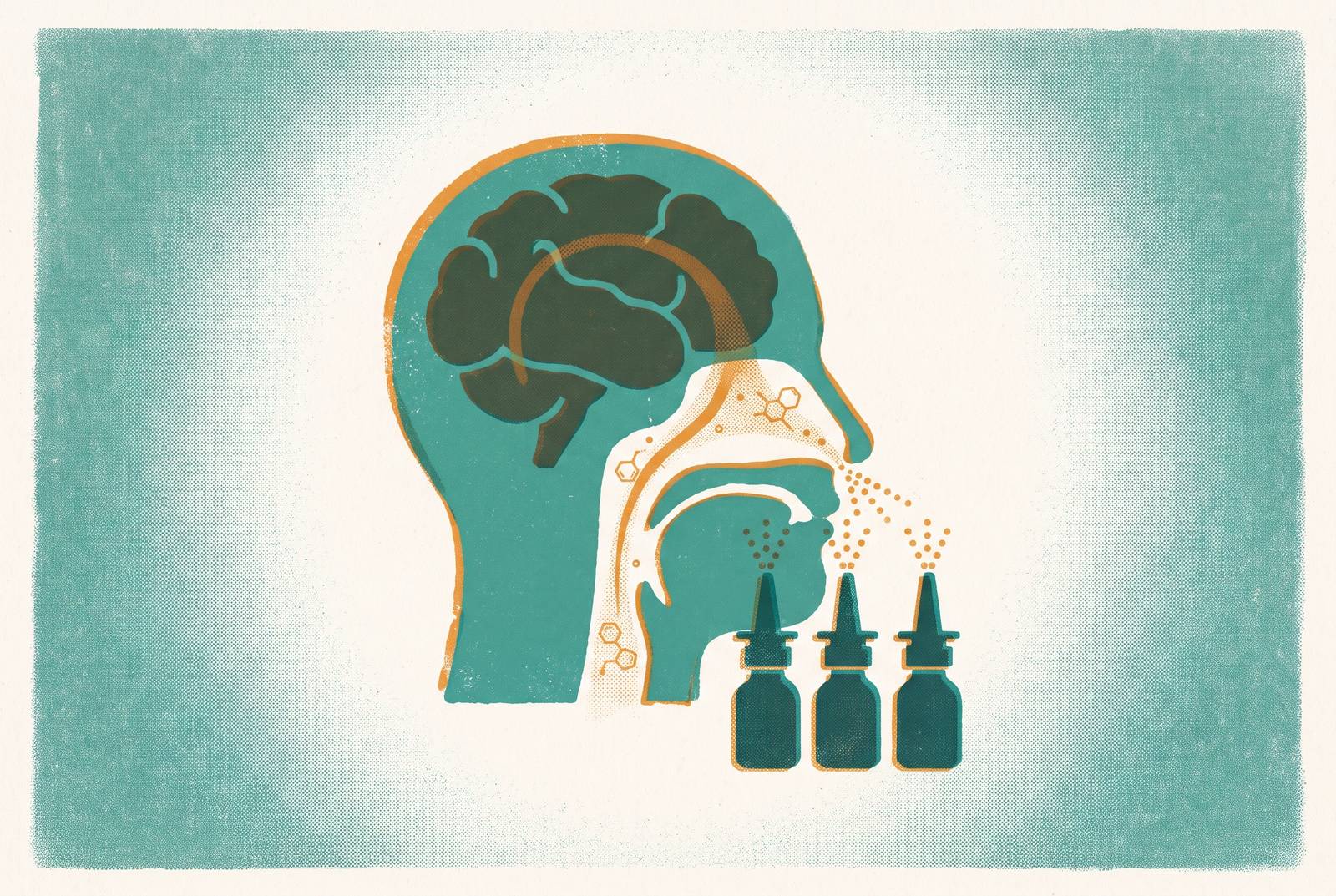
FDA-approved intranasal CNS drugs establish a clinical and regulatory precedent that nanoparticle nose-to-brain delivery for CNS peptide indications can build on. They do not, by themselves, prove that larger peptides will reach therapeutic brain concentrations through direct nasal pathways. The opportunity is to combine that precedent with targeted deposition, peptide protection, and measured CNS exposure, turning a credible anatomical route into a reproducible treatment platform.
Why the blood-brain barrier makes CNS drug delivery structurally hard
The blood-brain barrier restricts entry of many small molecules and most biologics and peptides, making CNS delivery structurally difficult. A drug can show promising biological activity but still fail to reach its target in the brain after oral or parenteral administration. Systemic delivery brings more barriers, including protein binding, metabolic degradation, and the spread of the drug away from the CNS. Oral administration also introduces first-pass metabolism. More drug in the body does not necessarily mean enough drug in the brain.
Direct injection can avoid some of these obstacles, but it changes the practical terms of treatment. Intracerebral, intraventricular, and intrathecal administration require specialized practitioners and introduce risks including hemorrhage, infection, and tissue damage. Their use is limited to narrow clinical contexts. For sustained or outpatient treatment, the unresolved need is therefore not simply access to the CNS. It is a non-invasive route that favors brain exposure without imposing an unacceptable systemic side-effect burden.
The anatomy that makes the nose a direct route to the brain
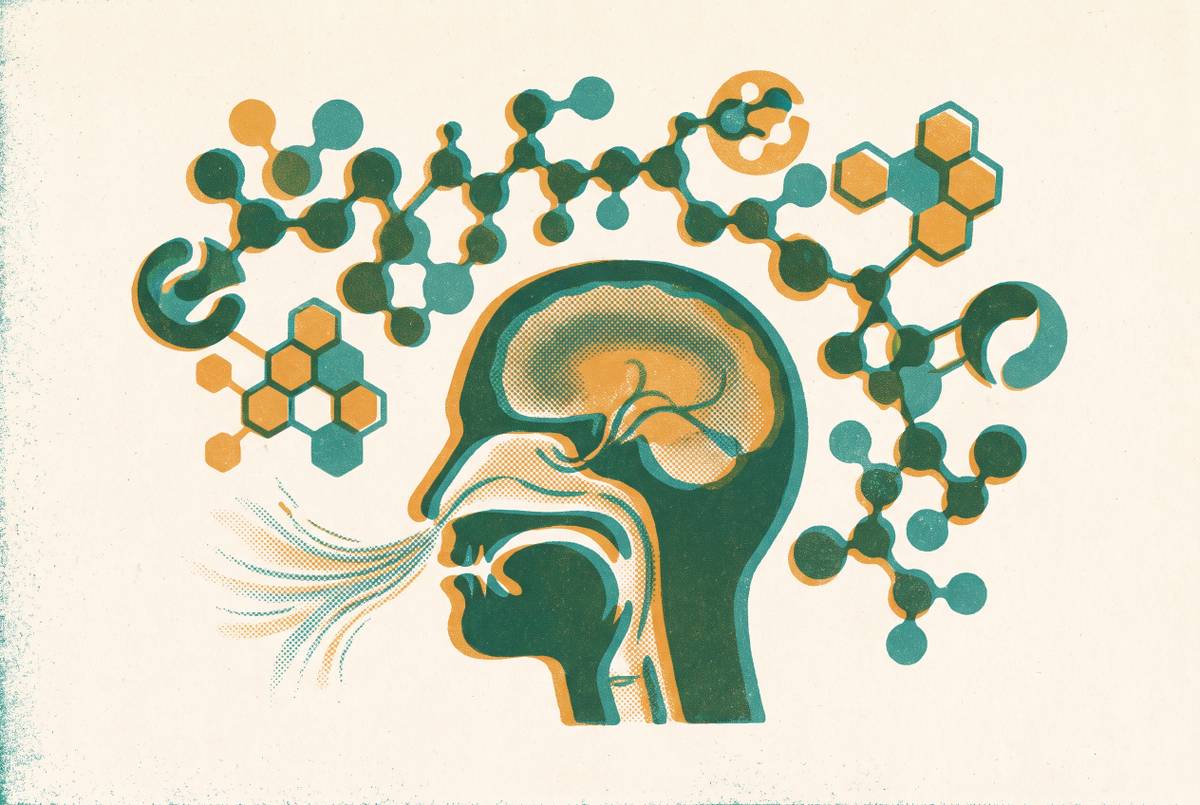
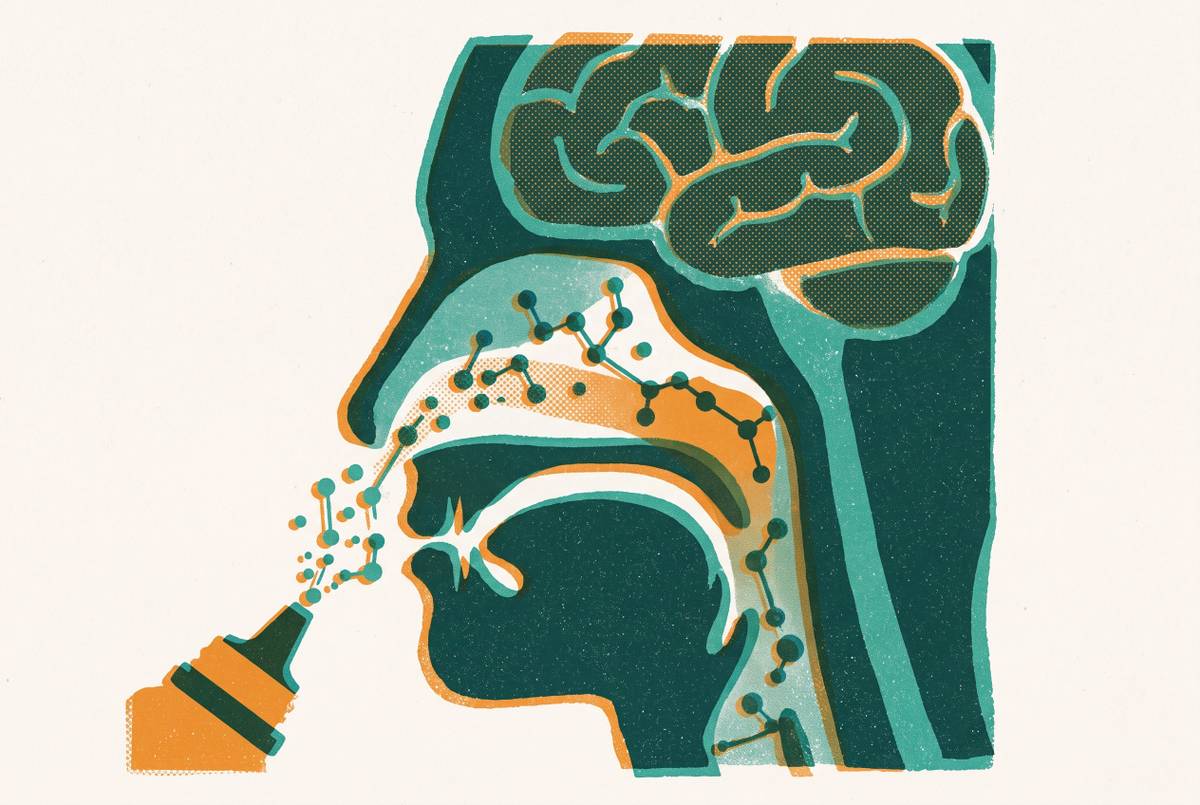
The nasal cavity offers an anatomical alternative through the olfactory and trigeminal pathways. Olfactory neurons in the olfactory epithelium at the roof of the dorsal meatus connect to the olfactory bulb and forebrain. The olfactory nerve passes through the lamina cribrosa, providing a physical connection between the nose and brain. The trigeminal nerve supplies both olfactory and respiratory regions and reaches brainstem-associated structures, including the pons and medullary regions. These connections permit transport that bypasses the blood-brain barrier.
The olfactory epithelium is the more direct and efficient route to the brain, while the larger respiratory region is mainly a site of systemic absorption. Respiratory tissue can also provide CNS access through trigeminal nerves, although trigeminal transport takes longer than olfactory transport. The distinction is central to formulation design.
The olfactory region is therefore a hard target for deposition because it is small. Its relatively low vascular density can help drugs reach the brain because highly vascular non-olfactory tissue quickly carries them into circulation. Meanwhile, mucociliary clearance shortens the time available for absorption by sweeping formulations away. Formulations must reach the appropriate tissue and retain an intact drug there long enough for transport.
What FDA-approved intranasal CNS drugs demonstrate as a class
The FDA has approved intranasal products across psychiatric disease, seizure management, and migraine. Esketamine, marketed as Spravato, provides the psychiatric precedent, while midazolam, marketed as Nayzilam, and diazepam, marketed as Valtoco, treat seizure clusters. Zavegepant provides an additional precedent in acute migraine. Currax Pharmaceuticals markets ONZETRA Xsail, which delivers sumatriptan as a nasal powder. Together, these products show that nasal administration can support clinically useful treatment across distinct indications and formulation formats.
Depression, seizure clusters, and migraine pose different therapeutic demands, so the approvals demonstrate that intranasal administration is not confined to one narrow application. They also establish that intranasal CNS products can pass regulatory review and demonstrate clinical efficacy. This is a substantial translational foundation. Developers of new candidates are not asking regulators to consider nasal administration for CNS disorders without precedent.
However, what exactly does that precedent validate? Approval of an intranasal drug establishes the approved product’s clinical performance, while the proportion transported through olfactory or trigeminal pathways versus systemic circulation may remain uncertain. The anatomical opportunity and the regulatory record support one another, but they are not interchangeable evidence. For next-generation peptides, the case is therefore stronger when product precedent is backed by direct measurements of brain exposure.
Why esketamine is the strongest single proof of concept for deep CNS delivery
The FDA initially approved Spravato in 2019 for treatment-resistant depression. In January 2025, the FDA additionally approved it as the first and only monotherapy for treatment-resistant depression, defined here as major depressive disorder with inadequate response to at least two oral antidepressants. That progression gives esketamine particular weight within the intranasal record. Its psychiatric use demonstrates that nasal administration can support a treatment acting on CNS targets beyond tissue adjacent to the olfactory bulb.
At doses of 56 mg or 84 mg, esketamine achieves substantial intranasal bioavailability and peak concentrations within a short window after administration. Its rapid pharmacokinetics correlate with early clinical effects. The mechanism involves NMDA receptor modulation in deeper brain structures, making the case relevant to researchers concerned about access beyond the initial nose-brain interface. Still, bioavailability and onset do not alone distinguish direct nasal transport from delivery through circulation. Esketamine is strongest as proof of clinically effective CNS treatment through nasal administration.
That distinction does not diminish its catalytic role. A successful psychiatric product gives formulation researchers a concrete endpoint against which to frame more difficult delivery questions. Following esketamine’s approval, interest expanded in PLGA nanoparticles, solid lipid nanoparticles, and chitosan-based carriers for CNS delivery. The next question became more exacting. Could engineered formulations extend the nasal route’s usefulness from relatively small molecules to peptides whose size, stability, and permeability create additional constraints?
How can nanoparticles deliver large-molecule peptides to the brain through the nose?
Large, hydrophilic peptides such as GLP-1 analogs face barriers that plain intranasal administration does not resolve. Their passive permeability across nasal mucosa is limited, enzymes can degrade them before transit, and mucociliary clearance can remove the formulation before absorption is complete. These obstacles compound one another.
Nanocarriers provide an engineering bridge by changing how the peptide encounters those barriers. Peptide-nanoparticle complexes can enhance stability, prolong nasal retention, alter biodistribution, and increase bioavailability at the target site. PLGA nanoparticles, solid lipid nanoparticles, and chitosan-based carriers represent different formulation approaches under investigation. For CNS peptides, the usefulness of these approaches depends on how well they protect the payload, keep it near the intended absorption region, and deliver brain exposure relative to systemic exposure.
Preclinical peptide findings show why that comparison deserves attention. Intranasal IGF-I produced CNS concentrations more than 100-fold higher than matched intravenous dosing, with biological activity confirmed at target sites. That result supports the feasibility of a substantial route-dependent exposure advantage. It does not establish that all peptides behave similarly or that nanoparticles are responsible for every intranasal benefit. Rather, it supplies a peptide precedent against which more complex formulations can be tested.
What the investigational pipeline in Alzheimer's and addiction reveals about where the route is heading
Intranasal insulin trials in Alzheimer’s disease extend the investigation beyond approved small-molecule products toward peptide treatment of neurodegeneration. The broader investigational landscape includes intranasal rivastigmine for Alzheimer’s and Parkinson’s disease, as well as intranasal olanzapine for acute agitation in psychiatric disorders. These programs address different clinical questions. They all test whether nasal delivery can treat conditions beyond the acute settings in which seizure and migraine treatments are used.
GLP-1 receptors are present on neuronal populations, and receptor agonists are being investigated for Alzheimer’s disease, Parkinson’s disease, and addiction. UCSF reports that observational data associated GLP-1 use with an 11% reduced risk of dementia compared with non-use. However, the EVOKE trials, the first large-scale randomised trials of semaglutide in early Alzheimer’s disease, did not show that the disease progressed significantly more slowly. A liraglutide trial published at the same time in Nature Medicine showed signs that cognitive decline had slowed in a small cohort.
The contradiction remains unresolved and cannot be explained away by enthusiasm for a different route. Does the negative result challenge the proposed neuroprotective biology, or was CNS exposure insufficient to test that biology adequately? Intranasal delivery offers a way to investigate the exposure question, not an established explanation for EVOKE’s outcome. A therapeutic hypothesis requires exposure at the intended target. Even then, adequate exposure would not guarantee clinical benefit.
Preclinical formulations make that question experimentally concrete. Intranasal poly(allyl succinate)-cell penetrating peptide-GLP-1 nanoparticles enhanced learning and memory in Alzheimer’s animal models within minutes of administration. Separately, UCSF-led research is investigating GLP-1/GIP brenipatide in human clinical trials targeting craving and drug use. The preclinical formulations and human clinical trials provide distinct lines of evidence.
The patient compliance case for intranasal delivery as an adjunct to the scientific case
For chronic neurological treatment, pharmacokinetics cannot be separated from whether patients sustain therapy. Among first-time semaglutide users in Denmark, 42% discontinued within 9 months, and over half stopped after one year. Those figures show substantial attrition, but they do not establish that injection burden alone caused it. Tolerability and cost also shape persistence.
Peripheral GLP-1 receptor activation in the gut helps cause nausea, so where the drug goes in the body may affect whether patients keep taking it. MetP Pharma articulates the design logic of shifting exposure toward the brain and away from the periphery. A nanoparticle-based intranasal formulation could support that goal by altering biodistribution. The benefit remains a hypothesis to test. Reduced peripheral exposure, fewer side effects, and improved adherence would each require evidence.
The practical stakes become sharper in cognitive decline and addiction, where maintaining a weekly injection schedule may be difficult. Intranasal administration is non-invasive and painless and can be suitable for daily self-administration and use at home. Suitability, however, depends on the particular product and treatment requirements. Removing needles does not automatically solve adherence. Its potential value is to reduce one treatment burden while formulation engineering addresses the separate problem of sustained, adequate CNS exposure.
What the approved drugs, the preclinical peptide data, and the compliance evidence together establish for next-generation intranasal CNS candidates
The combined evidence supports a development framework. Approved products provide a regulatory precedent for intranasal treatment of CNS disorders, while anatomy explains how direct brain access can occur. Preclinical GLP-1 findings add more specific evidence, including achievable brain-to-plasma ratios greater than 1 and rapid learning and memory effects in Alzheimer’s animal models. Each strand answers a different question.
The remaining translational gap is explicit. No nanoparticle-based intranasal GLP-1 RA formulation has yet completed human clinical trials, and the field is at the preclinical-to-Phase 1 transition. Existing approvals reduce uncertainty about whether intranasal CNS products can earn approval, but they do not establish peptide-specific safety, transport, or efficacy. Nor does the evidence establish nasal delivery as a prerequisite for every neurological GLP-1 application. Alzheimer’s disease, addiction, and the obesity-brain axis remain opportunities for investigation rather than validated indications for these formulations.
For a platform grounded in foundational nanoparticle IP, the task is to turn formulation capabilities into measured human performance. Peptide stability, mucociliary clearance, and olfactory targeting must all be addressed because failure at any one point can keep exposure too low for the drug to work. Human pharmacokinetic evidence must then connect delivery to the intended biological test. The scientific route is credible, and the regulatory precedent is tangible. The work ahead must show that CNS exposure can be reproduced, that safety is acceptable, and ultimately that the treatment helps patients.
Sources
- Current Clinical Evidence on Nose-to-Brain Drug Delivery - ScienceDirect
- Nose-to-brain drug delivery: from bench to bedside
- Nose-to-brain drug delivery: from bench to bedside
- Intranasal Nanoemulsions for Direct Nose-to-Brain Delivery of Actives for CNS Disorders
- Pharmacokinetics and Pharmacodynamics of Intranasal Solid Lipid Nanoparticles and Nanostructured Lipid Carriers for Nose-to-Brain Delivery
- Intranasal drug delivery: Unlocking the nose-to-brain route for central nervous system therapies - ScienceDirect
- Advancements in Nanocarrier Systems for Nose-to-Brain Drug Delivery
- Intranasal Drug Delivery Technology in the Treatment of Central Nervous System Diseases: Challenges, Advances, and Future Research Directions - PMC