Non-Injection BBB Bypass Platforms Evaluated Against Peptide Therapeutic Requirements
Nanoparticle nose-to-brain delivery best matches peptide needs, but human proof is missing.

Nanoparticle nose-to-brain delivery is the best fit for CNS peptide indications among the platforms considered here because it combines BBB bypass with protection against degradation and the chance of sustained exposure. That is a compatibility judgment. Evaluating these platforms against peptide requirements shows why this architecture deserves attention and which translational problems remain unresolved.
Why therapeutic peptides impose uniquely demanding delivery requirements that the BBB systematically defeats
Therapeutic peptides combine large molecular weight, hydrophilicity, and susceptibility to enzymatic breakdown, while the blood–brain barrier restricts access through tightly connected endothelial cells. Potency cannot compensate for exclusion from the target tissue.
Entry into brain endothelium is not the endpoint. Efflux transporters such as P-glycoprotein can pump molecules back out, adding an active exclusion mechanism to the barrier’s low permeability. A delivery platform must therefore do more than increase contact with endothelial cells. It must offer a route through, or around, the processes that limit net brain exposure.
DPP-4 reduces the peripheral half-life of GLP-1 to under two minutes, illustrating how quickly an unprotected peptide can disappear before reaching a brain target. That figure concerns GLP-1 and does not establish the lifetime or brain exposure of every GLP-1 receptor agonist. The particular therapeutic must reach its target intact and remain available long enough to act.
Molecular weight tolerance accommodates large peptides, transport or bypass mechanisms address exclusion, and protection plus release control address degradation and sustained exposure. A technology developed for small molecules or nucleic acids cannot inherit peptide suitability by association. Its molecular architecture must be assessed against the cargo it is now expected to deliver.
How do the five principal non-injection BBB platforms deliver cargo to the brain?
The five approaches differ in what they change. Some change the barrier, some help with cellular transport, and others pair a bypass route with a carrier that protects the cargo. They are not mutually exclusive technologies, nor were they all designed primarily for peptides. Expectations also need calibration because the strongest human CNS delivery evidence currently lies with intrathecal and intraparenchymal bypass, while systemic targeted BBB crossing remains predominantly preclinical.
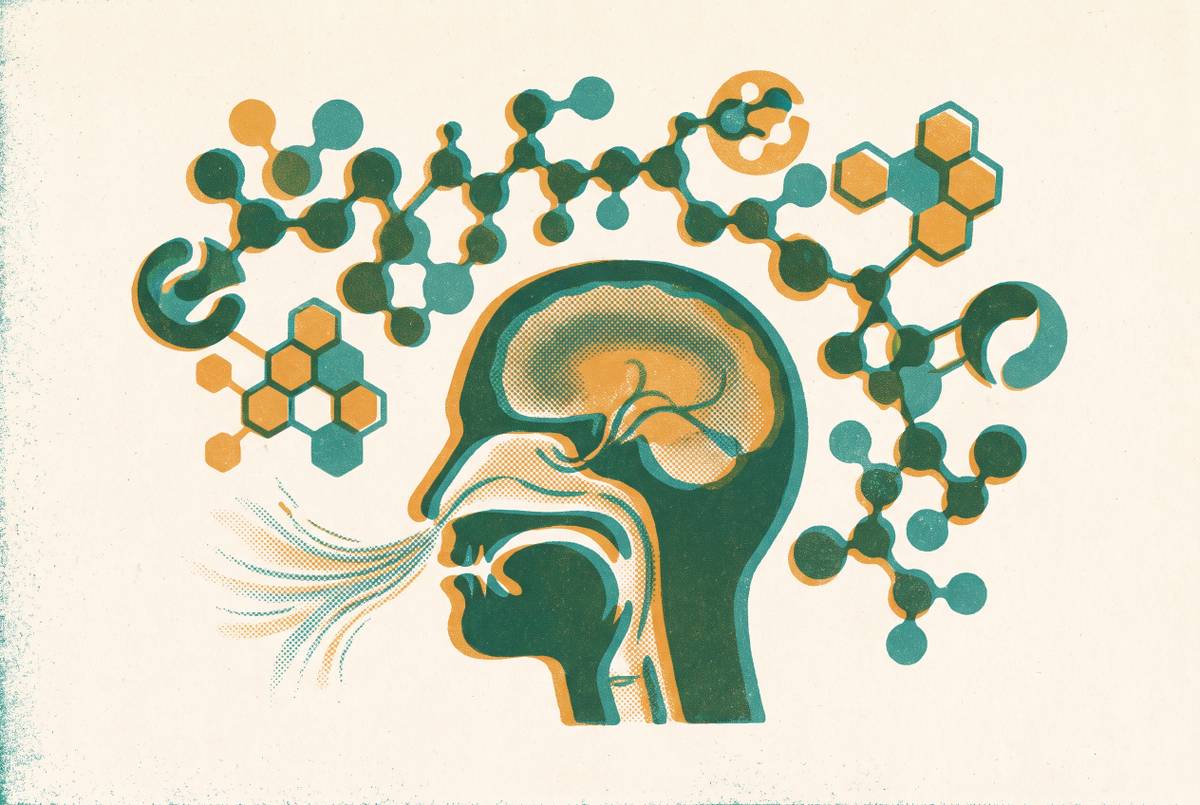
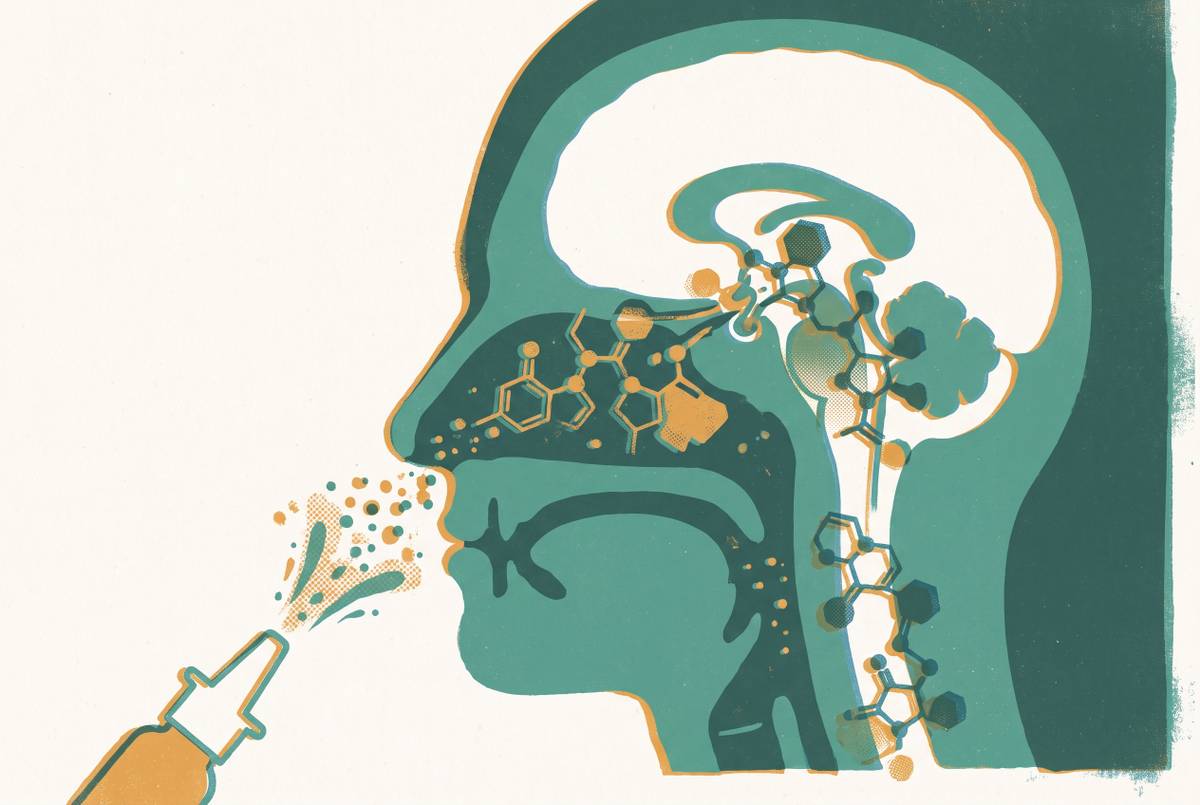
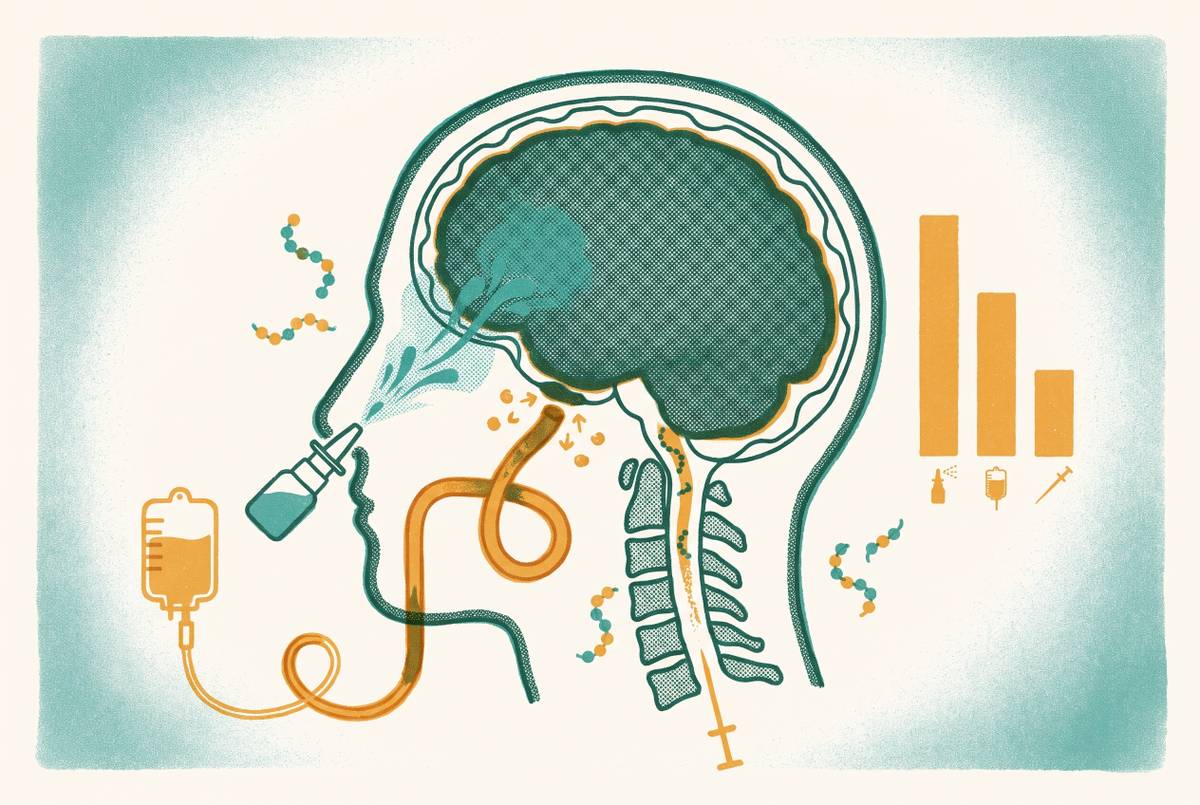
Intranasal, or nose-to-brain, delivery uses olfactory and trigeminal pathways from the nasal cavity to the CNS. It circumvents the BBB. The route can bypass first-pass metabolism and has been investigated for small molecules, proteins, peptides, nucleic acids, siRNA, and herbal compounds.
Focused ultrasound, abbreviated FUS, temporarily opens the BBB. Its role is to create an access window for whatever therapeutic is circulating systemically, including small molecules or antibodies. Treatment may still need an injection even when the barrier intervention does not, because the cargo still needs systemic administration.
Cell-penetrating peptide conjugation uses short protein transduction domains to facilitate intracellular transport of bioactive molecules. These domains can be conjugated to cargo or co-administered. Exendin-4 co-administered with L-penetratin demonstrated direct nose-to-brain transport through comparisons of plasma and brain concentrations after intranasal versus subcutaneous administration. This approach modifies transport without necessarily enclosing the therapeutic inside a carrier.
Molecularly imprinted polymeric nanocarriers, or nanoMIPs, combine antibody-mimetic recognition with tunable physical and chemical properties and controlled release. Surface ligands including ApoE, transferrin, and Angiopep-2 exploit receptor-mediated transcytosis, or RMT, to increase BBB permeation. Recognition is central to this design. Rather than serving only as a passageway, the carrier incorporates selectivity and release behavior into its structure.
NanoInBrain adds a depot to a polypeptide nanocarrier. Its 2026 preclinical platform combines that carrier with a hyaluronic acid–poly-L-glutamate crosspolymer, abbreviated HA-CP. Ex vivo Franz diffusion studies and a nasal-mucosa-on-chip model demonstrated permeation, while HA-CP prolonged nasal residence to approximately four hours and increased total brain accumulation. In vivo imaging also showed intracellular uptake in neurons and microglia.
Applying peptide requirements to each platform reveals a sharp divergence in structural fit
Each approach must deal with size, exclusion or efflux, and degradation, and must also provide sustained exposure for delivery to be useful. Opening a route and protecting the cargo that travels through it are separate needs. They also reveal why combining mechanisms can be more appropriate than selecting a transport technology alone.
An open barrier can admit a circulating therapeutic, yet the intervention does not address enzymatic loss during systemic transit. Its temporary access window also differs from a sustained-release system. This architecture is better aligned with small molecules or antibodies with long systemic half-lives than with short-lived, unprotected peptides.
CPP enhancement tackles transport more directly than stability. The exendin-4 and L-penetratin findings support its ability to improve nose-to-brain passage, but co-administration alone does not encapsulate a peptide against nasal enzymes. Under the same criteria, improved transport is only part of the solution. A separate protective or release-controlling component would still be needed to address the remaining vulnerabilities.
NanoMIPs offer recognition, tunable surfaces, and controlled release. In theory, these properties make them a good fit for cargo that needs both protection and selective access. However, an RMT-based design still depends on transport across a biological interface. Biocompatibility, large-scale production, and the regulatory path remain limitations of this emerging platform.
Intranasal nanoparticles combine route selection with cargo protection. Encapsulation can shield peptides from nasal enzymatic degradation, while direct neural transport avoids the requirement for systemic circulation and its exposure to DPP-4. A depot such as NanoInBrain’s HA-CP component adds a mechanism for extending delivery beyond a single transport pulse. Olfactory access to limbic and hippocampal structures, together with broader trigeminal distribution, gives this combination anatomical relevance to neurodegeneration and addiction targets.
The honest objection: intranasal peptide bioavailability is low, variable, and unproven in humans at therapeutic scale
Human studies show low and variable brain concentrations, and no nose-to-brain peptide formulation has received regulatory approval as of 2026. Standard intranasal formulations without carriers also face a practical size limit, with larger peptides presenting greater difficulty. Nanocarriers were designed to address that problem, but successful animal delivery has not translated reliably into therapeutic human exposure.
Animal studies and early human imaging suggested that intranasal oxytocin reaches brain regions including the amygdala. Yet a large 2021 trial in children with autism found no improvement in social behavior. Evidence of regional access therefore cannot stand in for evidence of clinical benefit, even when the proposed biology is compelling.
The translation gap extends beyond one peptide or carrier. Peptide-loaded dendrimers remain highly limited clinically despite extensive preclinical investment, and promising rodent findings often fail to reproduce in nonhuman primates or humans. Greater CNS delivery also introduces a distinct safety question. Higher brain exposure could amplify off-target neurological effects that low exposure after systemic administration currently avoids.
FUS needs specialized infrastructure, and systemic nanoparticle RMT faces its own nonhuman-primate-to-human reproducibility questions, but neither observation validates nasal delivery. The structural argument remains narrower. It identifies a combination that addresses the known peptide obstacles by design, without establishing that the resulting exposure is sufficient, reproducible, safe, or beneficial.
The response is to distinguish route limitations from formulation limitations. Depot systems have extended nasal residence and brain accumulation in preclinical models, while CPP enhancement has increased brain-to-plasma ratios relative to subcutaneous administration. Click-chemistry surface modification is another way to try to close the bioavailability gap. These approaches make the unresolved variables more specific, but functional payload effects must still be demonstrated.
GLP-1 neurological applications as the highest-value test case for nose-to-brain peptide delivery
GLP-1 provides a high-value test of this reasoning. Its receptors are expressed in the hippocampus, frontal cortex, and substantia nigra, linking delivery questions to regions involved in cognition, neurodegeneration, and motor control. Endogenous GLP-1 is also produced in the nucleus tractus solitarius and acts as a neurotransmitter in brain regions involved in reward processing. The relevant biology is therefore not confined to peripheral metabolic signaling.
GLP-1 is implicated in shared addiction mechanisms through the mesolimbic reward system, including attenuation of neural responses in reward-related regions. It is also implicated in synaptic plasticity changes relevant to neurodegeneration. Whether direct brain exposure is needed to engage these processes therapeutically, rather than relying on vagal or other indirect pathways, remains unanswered.
Observational analyses link GLP-1 use to a lower dementia risk, while placebo-controlled findings in Alzheimer’s disease have yet to show improvements in memory and cognition, and the evidence is of low certainty. These results cannot be treated as equivalent forms of evidence. Too little brain exposure could explain the null findings, but it has yet to be shown that delivery failures caused them.
Peripheral GLP-1 degradation shows why intact exposure needs to be checked, but the under-two-minute figure alone cannot show that CNS delivery is too low for every injected agonist. Brain effects after systemic administration may come from indirect signaling without direct BBB crossing. Consequently, neurological efficacy and direct CNS target engagement remain separate questions.
The olfactory pathway offers access to limbic and hippocampal structures relevant to the proposed indications, while encapsulation addresses peptide stability during nasal transit. This makes GLP-1 a demanding test case for platform compatibility. The decisive evidence would connect intact regional exposure with a functional effect and an acceptable neurological safety profile.
What the nose-to-brain nanoparticle combination requires next for therapeutic peptides to reach clinical viability
The next step is a defined engineering agenda. NanoInBrain’s HA-CP results provide a preclinical template for increasing mucosal residence and total brain accumulation through a depot formulation. Whether that behavior translates across peptide molecular weights and into nonhuman-primate models remains unresolved. Longer nasal residence is useful only insofar as it supports the required intact CNS exposure.
Formulations need to preserve peptide integrity through manufacturing, storage, and the mucosal environment. Thermostability and shelf-life under real-world conditions remain under-reported in the preclinical literature. These are distinct tests of whether encapsulation can become a dependable pharmaceutical process.
The influence of Angiopep-2 density on BBB penetration remains poorly understood. For nose-to-brain carriers that also exploit RMT at the olfactory epithelium or within CNS tissue, ligand density requires in vitro and in vivo characterization rather than an assumption that more targeting ligand means better delivery. The combined design must be tested to find out what route bypass and receptor-mediated transport each contribute.
Recognition technologies could eventually complement that work. As nanoMIPs improve their biocompatibility and manufacturing scale, their antibody-mimetic selectivity may become useful within nasal nanoparticle approaches, joining recognition precision with route efficiency.
Platforms built on deep, validated intellectual property and decades of formulation knowledge are better placed to study these linked variables systematically than those built on novelty alone. Clinical viability still depends on reproducible exposure, functional effects, and safety. The structural analysis makes that agenda tractable by identifying specific formulation and translation problems, rather than asking an unprotected peptide to overcome a fundamentally mismatched route.
Sources
- Crossing the Blood–Brain Barrier with Molecularly Imprinted Polymeric Nanocarriers: An Emerging Frontier in Brain Disease Therapy - De - 2026 - Advanced Science - Wiley Online Library
- Nanoparticle-Based Drug Delivery Across the Blood–Brain Barrier: Current In Vivo Evidence, Translational Challenges, and Future Perspectives
- The Nasal–Brain Drug Delivery Route: Mechanisms and Applications to Central Nervous System Diseases
- Non-Invasive Drug Delivery across the Blood–Brain Barrier: A Prospective Analysis
- A rationally designed polypeptide-based hybrid platform for targeted intranasal brain drug delivery - PubMed