Why Peptide Delivery Platform Depth Is Measured in Foundational Patents Not Published Papers
Patents, not papers, show who owns a peptide delivery breakthrough.

Peptide delivery platform depth is measured by foundational patent claims, because ownership of a delivery breakthrough requires protection. For anyone assessing a university’s nanoparticle IP for peptide delivery, the decisive questions concern what the patents claim, when they were filed, and how later formulation and route claims reinforce them. Papers establish scientific contribution. Patents define the protected invention.
Why the core scientific challenge in peptide delivery creates a structural IP imperative
Peptides are large, fragile molecules that face several biological barriers before they can act. They degrade in the gastrointestinal tract, struggle to cross membranes, and can lose potency before reaching their target. Unlike a small-molecule drug that can cross these barriers more readily, a peptide may depend on its delivery system for protection, transport, and release. Oral, transdermal, and intranasal approaches encounter different versions of that engineering task.
The difficulty of discovery, however, does not guarantee difficulty of imitation. Once a paper explains a successful delivery mechanism, competitors can read the solution and build on it, bypassing the original search. That is how scientific disclosure creates public value. Without protection in place first, it can also cost the discoverer a commercial advantage by creating prior art against later patent claims. The invention therefore needs protection before publication makes it available to the field.
What a patent actually owns versus what a paper merely establishes
A paper establishes what researchers discovered and disclosed. A granted patent establishes exclusive rights over the invention defined by its claims, for up to 20 years from filing. A patent does not own an entire scientific principle simply because its description discusses it, and an application is not equivalent to granted protection.
After an application is published, it usually takes several years to gain granted protection, and competitors can see the proposed invention during that time. A narrow claim can show competitors a way to deliver peptides while leaving them room to design around it. Filing before publication protects the opportunity to seek rights, but the depth of the filing determines how much of the solution those rights may cover.
Separate claims can address formulations, dosing regimens, manufacturing processes, delivery routes, and therapeutic indications built on the same foundation. Each layer protects a different point of imitation. Foundational patents can also work with trade secrets around the discovery engine, so that public claims protect the delivery invention while undisclosed knowledge protects how further inventions are generated.
How patent adoption patterns differ between deep-science platforms and other startups
The special theme in an international intellectual property organization’s 2026 innovation report says that roughly half of deep-science startups hold patents, while a much smaller share of other startups do. The gap fits the underlying economics. A replicable scientific mechanism needs a different form of protection from a software feature or business model. Peptide delivery falls in the first group because it has to overcome biological barriers through engineering that can be protected.
The same report finds that the share of deep-science ventures that hold patents rises sharply as they move from seed stage to late stage. That rise fits with platforms adding formulation and indication claims around their first invention. These patterns establish that patent protection is characteristic of deep-science development.
What, then, would portfolio maturity look like? An expanding set of claims that follows the platform’s technical development is more informative than a static patent count. Conversely, an unchanged portfolio raises the question of whether the company’s protection extends beyond one invention to a reusable system. Answering that question requires looking inside a patent, where the distinction between a product claim and a platform claim becomes concrete.
What a platform patent actually claims — the BioLife OralMatrix case
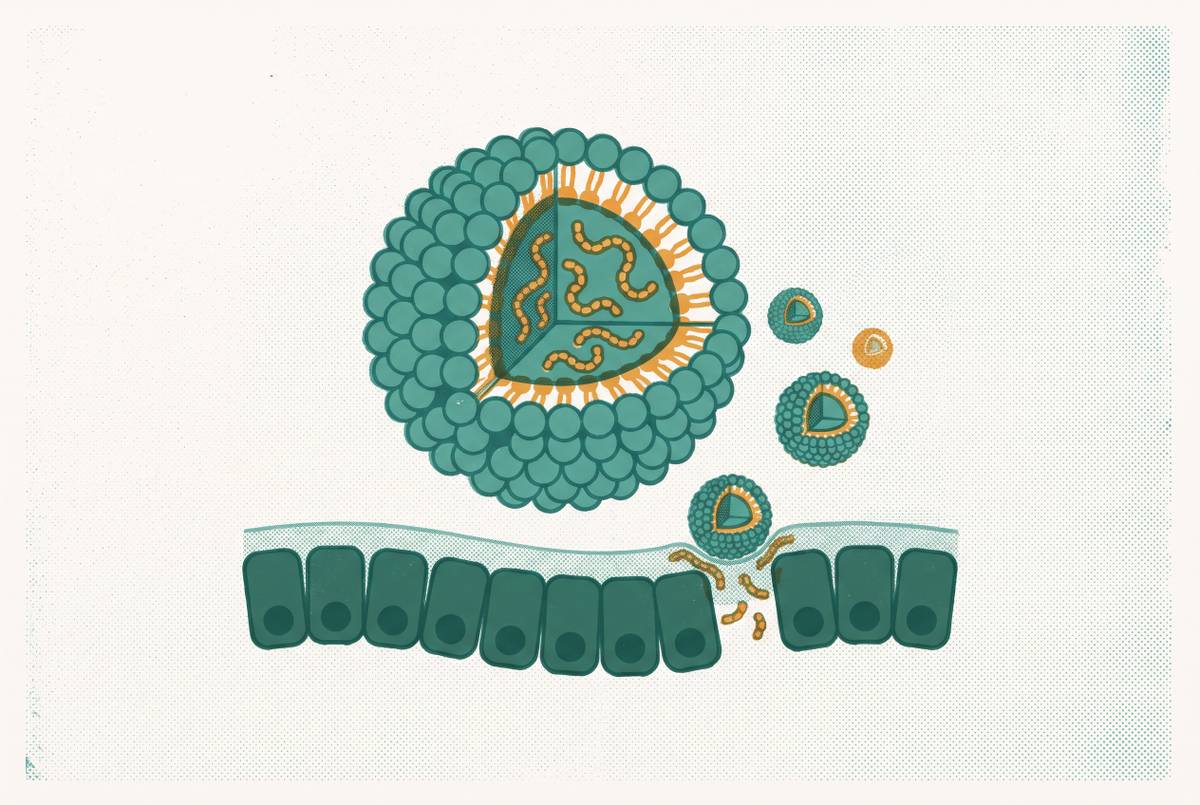
BioLife’s OralMatrix patent illustrates the attempt to protect a delivery mechanism across a therapeutic class. OralMatrix uses a dissolvable effervescent tablet to create a gastric buffer that protects peptide therapeutics during gastrointestinal transit and supports absorption. The protected concept is a formulation environment. Its platform significance lies in that environment’s potential application beyond the peptide used to demonstrate it, rather than in a coating or absorption enhancer considered alone.
BioLife’s preclinical studies demonstrated measurable systemic semaglutide exposure after oral administration, providing in vivo proof of concept. That evidence supports the proposed delivery method, but it does not show efficacy in humans. Nor does the patent depend on clinical proof to define the invention it seeks to protect.
The useful comparison is therefore between two kinds of scope. A patent limited to one drug formulation protects that form of the drug, while claims that cover a therapeutic class can leave room for more peptide applications. Experiments still have to show whether those applications work. Whether competitors can use the claimed mechanism is an IP question, which leads to another distinction between protecting the formulation and protecting how it reaches its destination.
Why delivery route patents represent a separate and compounding layer of platform protection
Route-focused patents protect claimed implementations of a transport pathway. They do not automatically confer ownership of every use of an anatomical route. Their reach depends on the claims. Nevertheless, a transport mechanism that accommodates different peptides can create protection distinct from patents on any individual payload.
Vector Science & Therapeutics’ June 2026 provisional filing illustrates that approach through a wearable transdermal peptide delivery platform. The filing describes a pulsed-magnetic-field system that guides microscopic peptide carriers through the layers of the skin without injection, electrical stimulation, or needles. As a provisional filing, it represents a step toward seeking granted rights over the modality.
A filing describing a gold nanoparticle core coated with PEG hydrophilic polymer and linked to a therapeutic agent through a functional linker for Huntington’s disease places the carrier’s construction at the center of the claim. Such architecture claims can overlap with formulation and route claims. A competitor may then need to redesign several connected parts rather than substitute one ingredient, a constraint that becomes especially significant when the destination is the narrow, anatomically defined olfactory-to-CNS pathway.
Why the nose-to-brain route creates a particularly defensible IP perimeter in peptide delivery
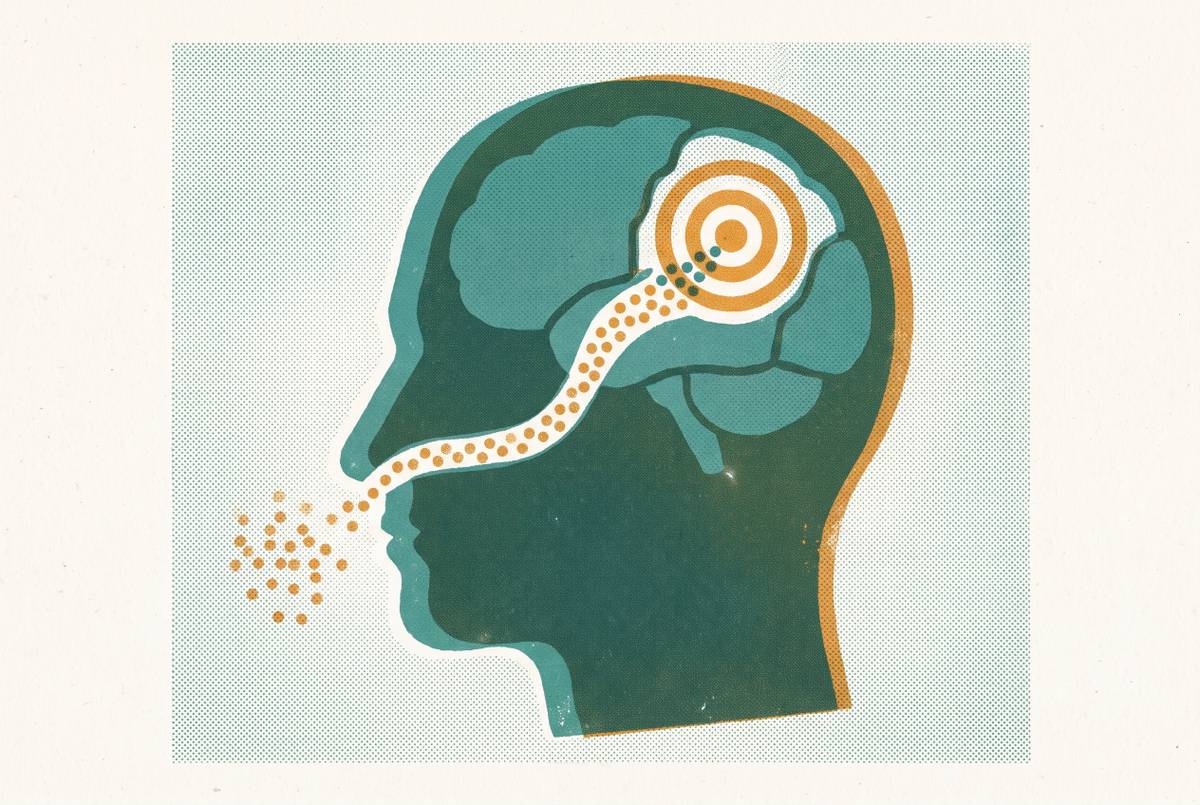
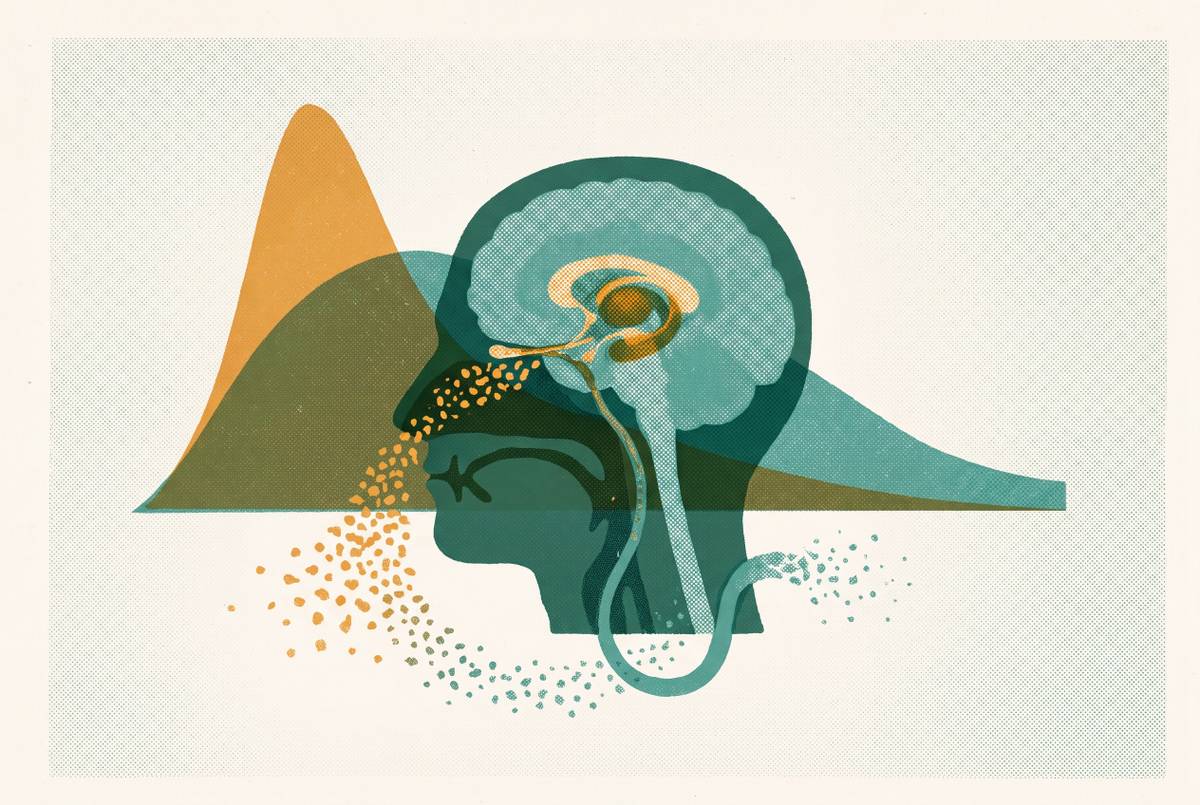
Intranasal delivery offers direct CNS access through olfactory and trigeminal nerve pathways, bypassing the blood-brain barrier and providing access beyond systemic circulation. That makes the route scientifically distinct. Research published in the Journal of Neurology and Neurosurgery reported brain uptake of intranasally administered GLP-1 in mice at more than five times that achieved through intraperitoneal injection. This is animal evidence of a route advantage, with efficacy and safety in humans still unestablished.
The route alone does not solve delivery. Mucociliary clearance can remove unprotected peptides before they reach the olfactory epithelium in therapeutically relevant quantities. Nanoparticle design addresses that delivery problem, while the intranasal pathway provides access. The distinction prevents an important confusion, because enhanced peptide stability is a property of particular formulations rather than an inherent benefit of placing a drug in the nose.
Together, the design and pathway could have several layers of protection, including nanoparticle architecture, surface chemistry that allows CNS penetration, and the claimed way of using intranasal delivery. A formulation optimized for the olfactory target cannot simply be transferred to an oral or subcutaneous route without fundamental redesign. Early foundational claims can therefore occupy an upstream position in the delivery system, although their practical defensibility still depends on what the granted language actually covers.
Why the GLP-1 neurological frontier raises the stakes for CNS delivery IP specifically
GLP-1 receptors are expressed on neuronal populations in the brain, providing a biological basis for investigating neurological applications of GLP-1 receptor agonists. Links to lower risks of seizures, substance addiction, and neurocognitive disorders give more reasons to study these drugs. They do not establish therapeutic efficacy. Because those associations concern systemically administered drugs, they also leave open how much of any observed effect depends on direct CNS exposure.
The clinical counter-evidence must remain central to that question. The Evoke trials did not demonstrate slowing of Alzheimer’s disease progression, and exenatide did not slow Parkinson’s disease in a UK trial. These results challenge the neurological therapeutic hypothesis. Insufficient brain exposure is a possible explanation, but failure does not establish that delivery caused the outcome or that another route would succeed.
The narrower inference is still consequential for platform IP. If meaningful CNS exposure is required, a delivery system capable of providing it becomes a way to test a hypothesis that systemic administration may not resolve. The molecule may be suitable while the route is inadequate, but that remains a proposition to investigate.
Indication-agnostic route claims can preserve commercial options during that uncertainty. They protect a claimed mechanism of access rather than betting exclusively on one neurological disease. Their usefulness does not require every indication to succeed, although clinical failure can plainly reduce the commercial value of the applications they cover.
How publication without prior patent filing destroys platform value — and why citation counts are a lagging indicator
A citation records that later work used or engaged with a discovery. A widely cited paper that discloses a delivery mechanism before a protective filing can carry a cost for the discoverer’s control over its use. The paper can become prior art against later claims and give competitors the details they need to pursue the same solution.
For that reason, the discipline described here is to file first and publish second. Academic incentives can pull the other way. Papers, conference presentations, and grant reporting reward disclosure, but an institution that wants to license a protected invention has to plan when to disclose it and when to file.
Columbia University nanoparticle IP for peptide delivery should be judged by this same order of filing and disclosure, with academic prestige alone given less weight. The relevant evidence is the relationship between the original filings, the licensed claims, and the later portfolio. A history spanning more than 30 years demonstrates a long research lineage, but that history is not interchangeable with remaining patent protection, given the term of an individual patent. Earlier work establishes the foundation, while later claims determine how much of the developed platform remains protected.
Citations are therefore a lagging record of scientific uptake. Patent portfolios can accumulate complementary protection as new formulations, routes, and applications emerge, but only when those additions are themselves secured.
What separates a durable delivery platform from a well-cited science project
For clinicians, investors, and scientific peers, comparing platforms starts with what the claims cover, with less weight given to how many papers have been published. What do the patents actually protect? How far upstream do they reach into the delivery mechanism, and were they filed before public disclosure made that mechanism available to others? Formulation and route claims also need to be checked to see if they strengthen the foundation or just repeat a narrow product concept. Grant status and the relationship between successive filings complete a more useful picture than a count of papers or applications.
This framework also separates ownership from clinical validation. Strong patents cannot make a therapy work if it is ineffective, just as sound experiments cannot create exclusive rights after the fact. A publication record helps assess the scientific proposition, while a coherent portfolio helps assess whether the platform controls the means of putting that proposition into practice.
The patent cliff between 2026 and 2032 puts more commercial pressure on this distinction as the time left for single-molecule IP shrinks and attention turns to platform-centric protection. For peptide delivery, the durable asset is a protected delivery mechanism whose formulation and route claims cover useful implementations beyond the successful experiment first described. Foundational patents establish that ownership in a way citation counts cannot, while the science must still establish what the owned system can do.