Early-Stage Companies Pairing Nanoparticle Formulation IP With Intranasal Peptide CNS Programs
Proprietary nanocarrier chemistry is what makes nasal peptides credible.

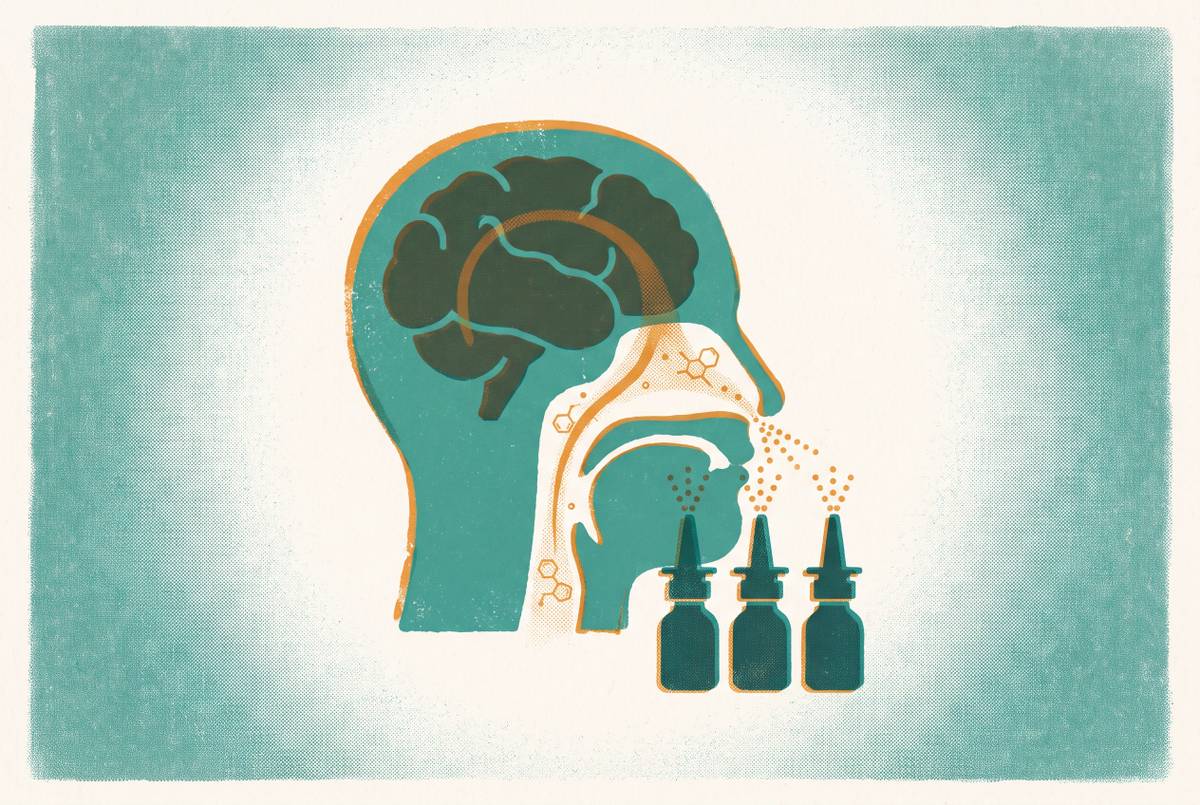
Nanoparticle nose-to-brain delivery for CNS peptide indications uses engineered carriers to protect peptides at the nasal mucosa and support access to olfactory and trigeminal pathways that bypass the blood-brain barrier. For early-stage programs to be credible, they need proprietary nanocarrier chemistry as well as nasal administration. That chemistry is the foundation for controlling delivery, navigating clinical translation, and extending a platform across neurological indications.
Early-stage companies make these programs credible by owning the nanocarrier chemistry that connects nasal deposition to CNS exposure, then testing it against the translation gaps. The carrier has to protect the peptide from nasal proteases, manage mucus and clearance, and support uptake along the olfactory and trigeminal pathways. IP built around particle architecture, surface functionalization, and mucoadhesive excipients, with device and dosing claims layered on top, gives the program control over that mechanism and lets it extend to other neuropeptides. Credibility still depends on evidence: rat brain-to-plasma ratios above 1 and ex vivo permeability data support preferential CNS exposure, but human brain delivery, manufacturing consistency, and regulatory precedent remain unproven.
Why GLP-1 biology points to the brain, not the gut
GLP-1 receptors are expressed throughout the mesolimbic dopaminergic system, including the nucleus accumbens, ventral tegmental area, and prefrontal cortex. These regions control reward processing, addiction, and compulsive behavior. Their involvement puts CNS delivery on firm biological ground. Activation of GLP-1 receptors in these circuits modulates dopamine release and attenuates reward-driven behaviors, making the brain a direct pharmacological target.
Preclinical studies across neurodegenerative conditions show reduced protein aggregation, enhanced autophagy, improved mitochondrial function, suppressed neuroinflammation, and preservation of synaptic integrity. These findings concern cellular maintenance and neuronal survival. They explain why researchers would seek brain exposure independently of peripheral metabolic effects. How a peptide can reach those receptors in useful quantities remains to be determined.
How the BBB turns a promising CNS drug into a systemic side-effect problem
Subcutaneous injection places a peptide into systemic circulation, leaving it to negotiate the blood-brain barrier before reaching CNS targets. The barrier comprises endothelial cells, astrocytes, pericytes, and tight junctions that selectively exclude exogenous substances, including peptide drugs. Increasing systemic exposure to obtain meaningful brain concentrations creates high peripheral concentrations, making delivery architecture a constraint on the therapeutic objective.
The nausea paradox sharpens that constraint. Gastrointestinal side effects are themselves mediated centrally through brainstem emesis circuits, so systemic dosing can produce nausea while still struggling to reach the intended brain targets. A CNS-targeted strategy must distinguish useful exposure from exposure that activates unwanted circuits. Lower systemic load could improve tolerability, but preferential brain delivery alone does not show that nausea will fall.
Three out of four patients quit GLP-1 therapy within a year, and only a small fraction remain after three years. Cost and side effects together account for most discontinuations, with nausea the leading clinical driver. A recent EHR claims data study found that a majority of patients who discontinued regained weight within a year, pointing to delivery and tolerability as program-design problems.
What the olfactory and trigeminal pathways actually offer as a bypass route
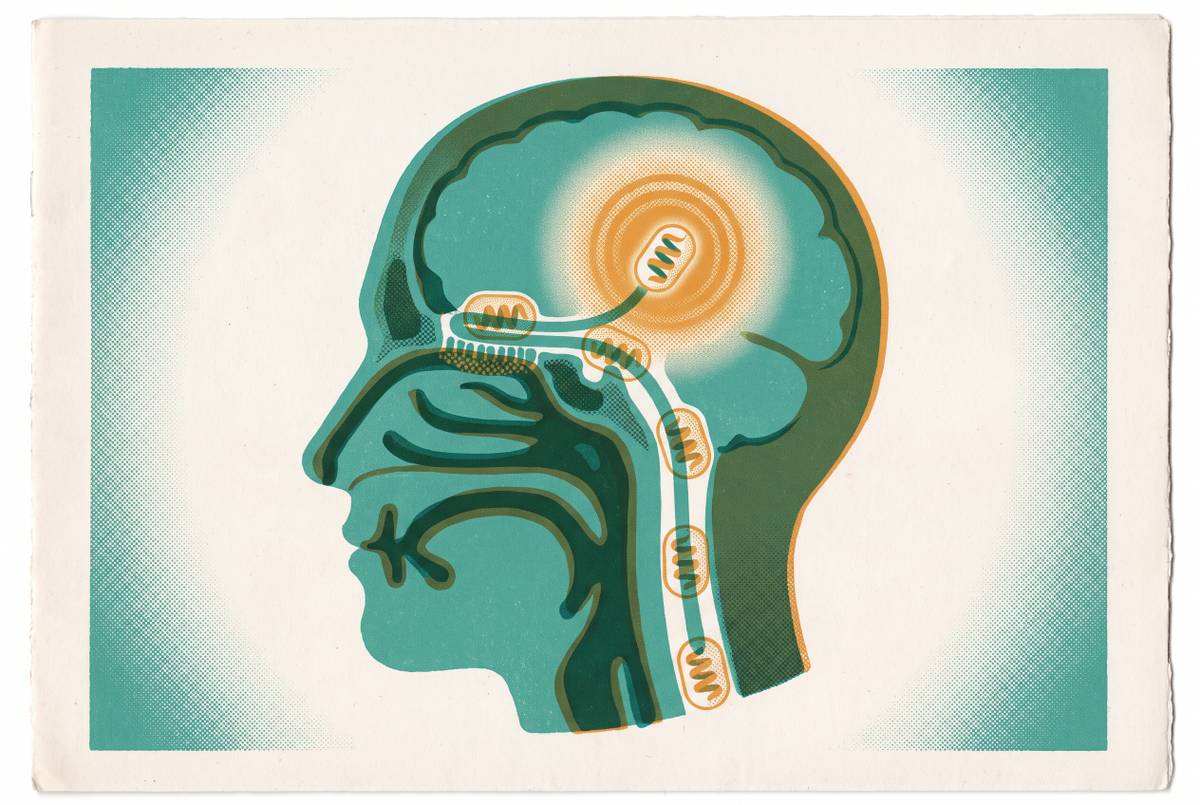
The nasal cavity offers an alternative anatomical connection to the CNS through the olfactory and trigeminal pathways. These routes bypass the BBB rather than requiring transcellular or paracellular passage across it. That is a different delivery proposition from systemic dosing. The olfactory route begins at the olfactory epithelium in the upper nasal cavity and follows olfactory nerve axons through the cribriform plate into the olfactory bulb and deeper brain structures.
The trigeminal pathway provides parallel access toward the brainstem and cerebellum, extending the territory potentially reachable through nasal administration. These pathways can carry a drug to the mesolimbic targets involved in GLP-1 biology. Yet anatomical continuity is only the starting point. Nasal formulations already approved for migraine, epilepsy, and depression establish clinical precedent for nasal CNS medicines, but they do not establish successful nanoparticle-mediated peptide transport. Whether a peptide can survive the nasal environment long enough to use the available pathways remains unresolved.
Why unprotected peptides fail at the nasal mucosa before they reach the nerve pathways
An unprotected peptide starts to break down before it can reach a route into the brain. Proteolytic enzymes in the nasal mucosa begin breaking it down before absorption, while mucociliary clearance sweeps unbound drug away from the olfactory region toward the nasopharynx. From there, systemic absorption or elimination can follow. A dose placed in the nose is not necessarily a dose available to the olfactory or trigeminal pathways.
The mucus layer and nasal epithelium add separate obstacles. Mucus acts as both a chemical and physical trap for unformulated hydrophilic molecules, while epithelial tight junctions restrict paracellular movement. Longer residence alone cannot solve every barrier. A formulation must preserve the peptide, manage its interaction with mucus, and support uptake across the tissue interface. This is why nanocarrier design is a gatekeeping technology for these programs rather than an optional refinement of a conventional nasal formulation.
How nanocarrier engineering converts the nasal route from anatomically possible to pharmacologically functional
Nanocarrier engineering addresses degradation, residence time, and uptake through linked design choices. Protective carriers shield peptide payloads from enzymes, while mucoadhesive coatings extend contact with the olfactory epithelium. Cell-penetrating peptide decoration can promote neuronal uptake. Particle geometry and charge tune the balance between mucus penetration and mucoadhesion, so the surface cannot be designed around retention alone. The same engineering must help the peptide reach neurons and then travel along olfactory and trigeminal fibers.
Carrier selection introduces another set of tradeoffs. Lipid-based, polymeric, protein-based, and inorganic nanoparticles differ in stability, loading capacity, surface modification, and manufacturing scalability. The relevant comparison is how a particular architecture protects its payload while meeting the demands of both nasal passage and brain delivery. Particle architecture patents, surface functionalization methods, and mucoadhesive excipient compositions therefore concern the delivery mechanism itself.
A 2025 study of TQ-AmCs nanoparticles reported enhanced nasal mucosa permeability in ex vivo work and brain pharmacokinetics substantially superior to conventional formulations. An anonymous Switzerland-based company announced in 2026 that its 2025 rat data showed brain-to-plasma ratios that stayed above 1 after intranasal administration. Those results support preferential CNS exposure in that model. They are not interchangeable evidence, however, and neither establishes human delivery performance or clinical efficacy.
What the early-stage program landscape looks like in 2026 and where the strategic gaps are
The 2026 landscape brings together device-led entrants, academic spinouts with proprietary carrier architectures, and platforms adapting peptides to non-injection delivery. Their starting assets differ, as do their unresolved questions. Landmark Medicines Ltd., based in Loughborough, UK, announced in September 2026 that it plans to move its proprietary nasal platform toward a human volunteer study. Its initial application is GLP-1 receptor agonists, including evaluation of semaglutide as a candidate molecule. The platform is described as formulation-agnostic and is the subject of multiple patent filings, while Landmark intends to investigate nose-to-brain delivery separately from systemic nasal absorption.
Other programs begin closer to the formulation itself. MetP Pharma, based in Switzerland, announced a brain-targeted GLP-1 opportunity in January 2026 anchored in its MetP® technology, with preclinical data showing preferential brain loading over intravenous dosing. NanoInBrain, an academic spinout in Spain, is developing a polypeptide-based nanocarrier integrated with the HA-CP Yalic® depot hydrogel. Its preclinical data on extended nasal residence and brain accumulation appeared in Biomaterials in May 2026. AGS Therapeutics, based in France, proposes microalgal extracellular vesicles for intranasal nose-to-brain delivery, a biological carrier approach distinct from synthetic nanoparticles.
These programs should not be treated as equivalents. Hardware IP protects a different asset from proprietary surface chemistry, and formulation-agnostic delivery still needs test evidence of CNS targeting for each molecule. Biological carriers also make manufacturing and regulatory work more complex in their own ways. Comparing these programs means looking at who owns the particle architecture, surface functionalization, and brain-targeting mechanism, as well as how well they have been shown to work. Device-formulation interface claims and indication-specific dosing protocols can extend that protection, but do not substitute for control of the enabling chemistry.
Why the neurological indications beyond weight make deep nanocarrier IP more valuable, not less, over time
The neurological opportunity widens the value of that chemistry because reward circuits are relevant to more than eating behavior. Washington University Medicine reported in January 2025 that GLP-1 receptor agonist use was associated with reduced risks of seizures and addiction to alcohol, cannabis, stimulants, and opioids. Association does not establish a treatment effect. The mesolimbic receptor biology nevertheless supplies a mechanistic reason to investigate targeted CNS exposure, rather than treating these observations as unrelated extensions of metabolic therapy.
Neurodegeneration presents a related but distinct rationale. The preclinical effects on protein aggregation, autophagy, mitochondrial function, and synaptic integrity identify processes that brain-directed delivery could investigate more directly. Dementia adds both vascular and regional considerations. GLP-1 biology intersects with stroke risk, blood sugar, hypertension, and weight, while olfactory and limbic access is anatomically aligned with regions implicated in these disease processes. None of this establishes that an intranasal peptide will prevent or treat dementia.
The platform argument rests on reuse without assuming interchangeability. A nanocarrier shown to deliver GLP-1 peptides to mesolimbic structures could become a candidate for other neuropeptides targeting the same circuits through peptide substitution. Each payload still needs its own evidence. But protection of the underlying architecture and surface methods need not restart with each indication, which gives foundational patents a different strategic role from claims around one formulation. Formulation-on-demand approaches risk repeating development work without accumulating equivalent control over the shared delivery mechanism.
The translation obstacles that separate preclinical proof-of-concept from a credible clinical program
Rodent brain-targeting results have historically translated poorly to humans because nasal anatomy, mucociliary clearance rates, and olfactory epithelial surface area differ substantially. Strong animal pharmacokinetics cannot erase those differences. A carrier must perform in two compartments, the nasal cavity and the brain, and success in one does not establish success in the other. Research priorities therefore include improved mucoadhesion, optimized permeation enhancers, and intranasal devices suited to the intended delivery task. Even then, longer nasal residence is an intermediate result, with adequate human brain exposure still to be demonstrated.
Manufacturing makes the challenge more demanding. Nanoparticle formulations need consistent particle size, surface chemistry, and drug loading across batches while meeting nasal administration sterility and pH requirements. Those properties are both production specifications and part of the mechanism being tested. If they cannot be controlled, the formulation becomes harder to evaluate as a reproducible product. Scalability and safety therefore belong within the program’s scientific case from the outset.
Regulatory precedent is also incomplete. No nanoparticle-formulated intranasal CNS peptide has yet completed the full regulatory pathway, and approved intranasal CNS drugs do not use nanoparticle carriers. Depending on the platform, sponsors face intersecting device, drug, and biologic considerations without a complete precedent. Foundational IP does not remove that uncertainty. Its advantage is structural, because proprietary formulation know-how supports protected iteration on the variables most likely to require adjustment, whereas commodity sourcing leaves less control over the core technology.
How do early-stage companies combine nanoparticle formulation IP with intranasal peptide delivery to build a credible CNS pipeline?
Durable positioning depends on whether patent protection follows the causal chain of delivery. Olfactory and trigeminal access requires survival at the mucosa, which depends on engineered surfaces whose performance must remain reproducible in manufacturing and human use. A patent filing alone does not establish that chain. The stronger position joins particle architecture, surface methods, excipient composition, device compatibility, and dosing protection around a coherent mechanism. These layers can reinforce one another without making successful translation inevitable.
Foundational nanocarrier research has value because its mechanisms can extend beyond a single peptide or market opening. Citation records and multiple patent families can indicate depth, but the decisive question is what the claims protect and whether that protection supports continued development. Neither changes the central strategic conclusion that a platform must control the chemistry connecting nasal deposition to CNS exposure. For credible early-stage intranasal peptide programs, nanocarrier IP is the program’s structural logic.
Sources
- Cell-Penetrating Peptide-Decorated Nanovectors for Nose-to-Brain Delivery: A New Treatment Option for CNS Diseases
- Nanoparticle-Enhanced Intranasal Drug Delivery: A Novel Strategy for Efficient Brain Targeting in Ischemic Stroke
- Pharmacokinetics and Pharmacodynamics of Intranasal Solid Lipid Nanoparticles and Nanostructured Lipid Carriers for Nose-to-Brain Delivery
- Nanocarrier-based intranasal drug delivery for enhanced neurological disorders treatment
- Intranasal drug delivery: Unlocking the nose-to-brain route for central nervous system therapies - ScienceDirect
- Intranasal Nano-Delivery Systems: Emerging Strategies for Central Nerv
- Advanced intranasal peptide delivery systems for improved management of Alzheimer's disease - PubMed
- Navigating the Nose-to-Brain Route: A Systematic Review on Lipid-Based Nanocarriers for Central Nervous System Disorders