Peptide Conformation Preservation From Nasal Mucosa to CNS Target Site
Nanoparticle nose-to-brain delivery for CNS peptide indications depends on preserving bioactive conformation during delivery into brain tissue. Olfactory and trigeminal pathways can bypass the blood-brain barrier, but peptides face structural threats at the nasal mucosa, during barrier crossing, and throughout onward transit. Effective formulation design must address all three checkpoints while leaving the peptide able to engage its target.
Why peptide conformation at the CNS target site is the variable that determines whether nose-to-brain delivery works
A peptide can be detected in brain tissue and still be pharmacologically inert if it arrives degraded or misfolded. Presence is not proof of receptor engagement. A delivery assay can therefore report success while leaving the central pharmacological question unanswered. Can the arriving molecule adopt the conformation its receptor recognizes?
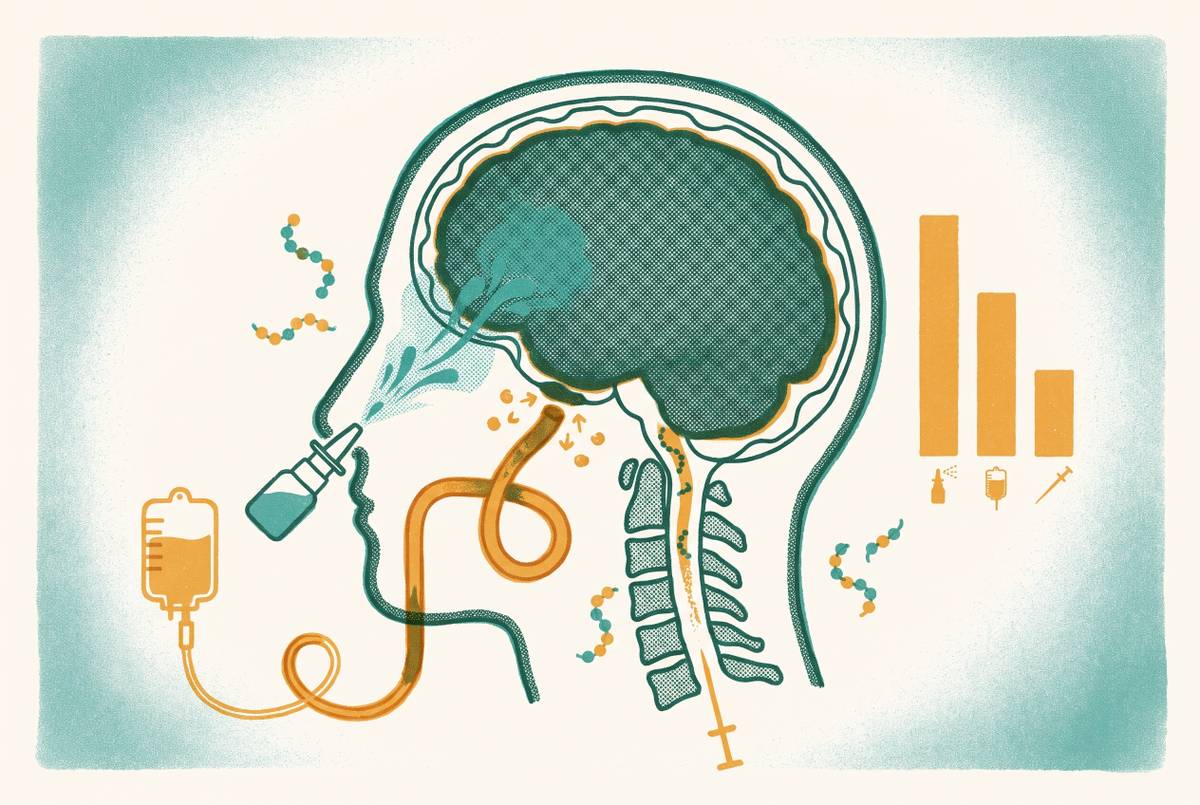
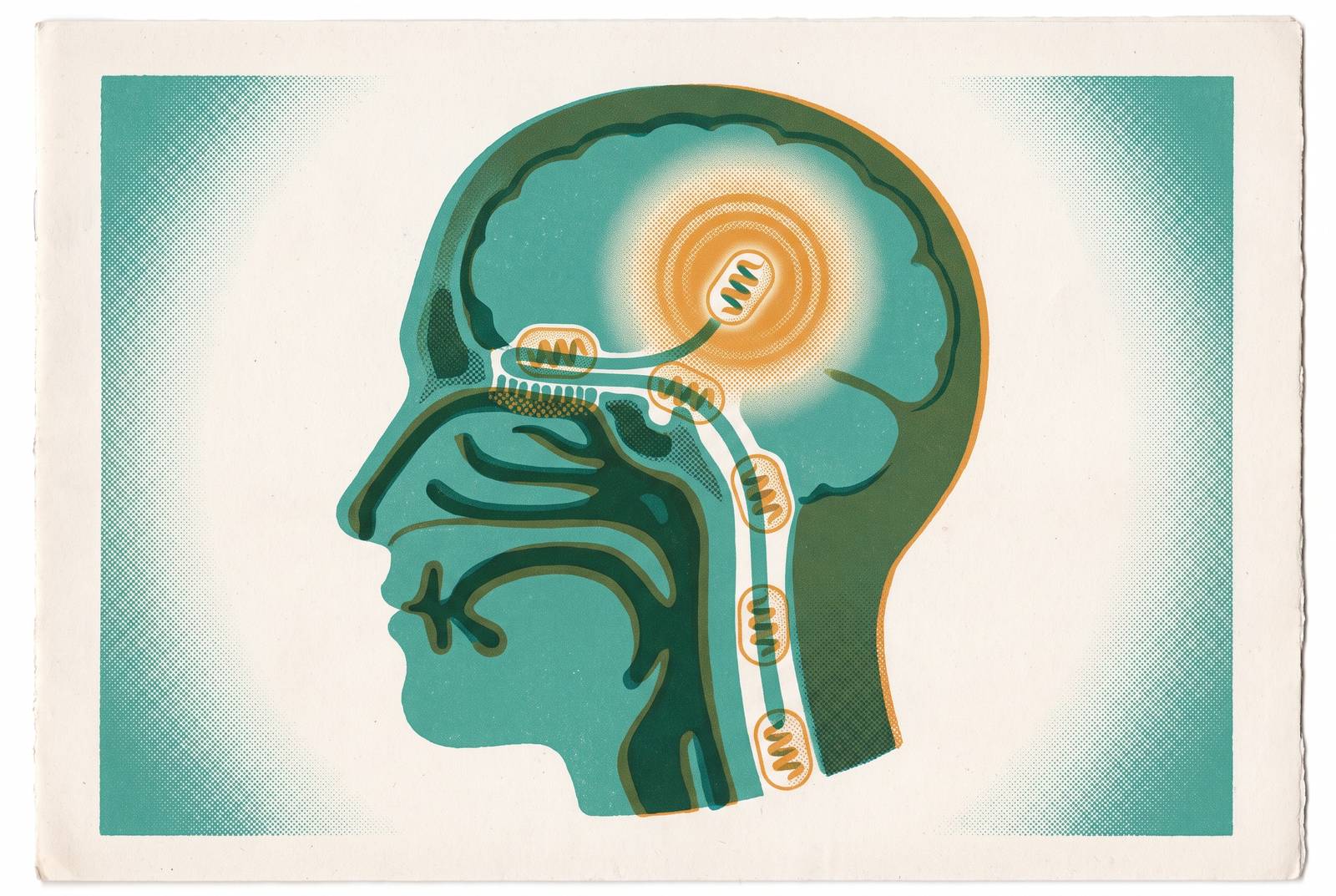
The anatomy gives peptides a way around the blood-brain barrier. Olfactory receptor neurons project through the cribriform plate to the olfactory bulb, while the trigeminal pathway connects the broader nasal mucosa to the brainstem. Both support intracellular axonal and extracellular perineural transport, with the faster extracellular pathway appearing dominant for most peptides. Yet neither route guarantees structural preservation.
Conformation is also an engineerable property. Backbone chirality and hydrogen-bonding networks influence secondary structure and receptor binding. That makes the nasal environment, barrier crossing, and onward transit three distinct design checkpoints. Protection at one cannot substitute for protection at another.
What the nasal mucosal environment does to peptide structure before absorption even begins
Proteolysis begins before a peptide reaches the epithelial barrier. Aminopeptidases cleave from the N-terminus, carboxypeptidases attack the C-terminus, and other proteases cut internal bonds. These attacks occur in both nasal mucus and at the epithelial surface. An unprotected molecule must survive in both places before it reaches a nerve ending. A study using sheep nasal homogenates illustrated the threat through rapid degradation of substance P.
The consequence is not simply a smaller dose. Partial cleavage can change the secondary structure that the remaining sequence can take, which may change receptor binding or lead to partial antagonist activity. Counting peptide-derived material would not show whether the intended drug had arrived or these changes had occurred. The relevant loss is functional as well as chemical.
Mucociliary clearance adds a separate constraint by removing deposited material within minutes. Peptide that has not been absorbed can be swept to the throat and exposed to gastric acid. Thus, the absorption clock runs while enzymes attack. This combination of brief residence and active degradation defines the engineering target at the first checkpoint.
Engineering approaches that preserve conformation at the mucosal checkpoint
Encapsulation physically shields a peptide, while mucoadhesion and thermoresponsive gelation extend its opportunity for absorption. Neither function alone answers the whole problem. Longer residence is useful only if the retained peptide remains bioactive, and protection is insufficient if clearance removes the carrier before uptake.
Bolon et al.’s July 2026 study used polylactic acid / poloxamer P188 nanoparticles surface-functionalized with a blocking peptide. The formulation protected the peptide from enzymatic degradation and preserved its activity against amyloid-beta aggregation. Mesoporous silica nanoparticles offer a different protective architecture through high surface area, large pore volume, tunable pores, and physicochemical stability. These approaches protect structure through the carrier while retaining the therapeutic sequence.
The 2025 PNPHO thermoresponsive polymer study addressed residence by using a carrier that is liquid at room temperature and gels on warm nasal mucosa. The 2026 AIChE chitosan-stabilized nanocarrier work combined mucoadhesion with high protein encapsulation and sustained release. Chemical modification takes another route. Chiral substitutions can reduce protease recognition while preserving, or engineering, the structure required for receptor binding. Here, the design goal is a bioactive conformational analog.
The conformational stresses imposed during mucosal barrier crossing and early nerve uptake
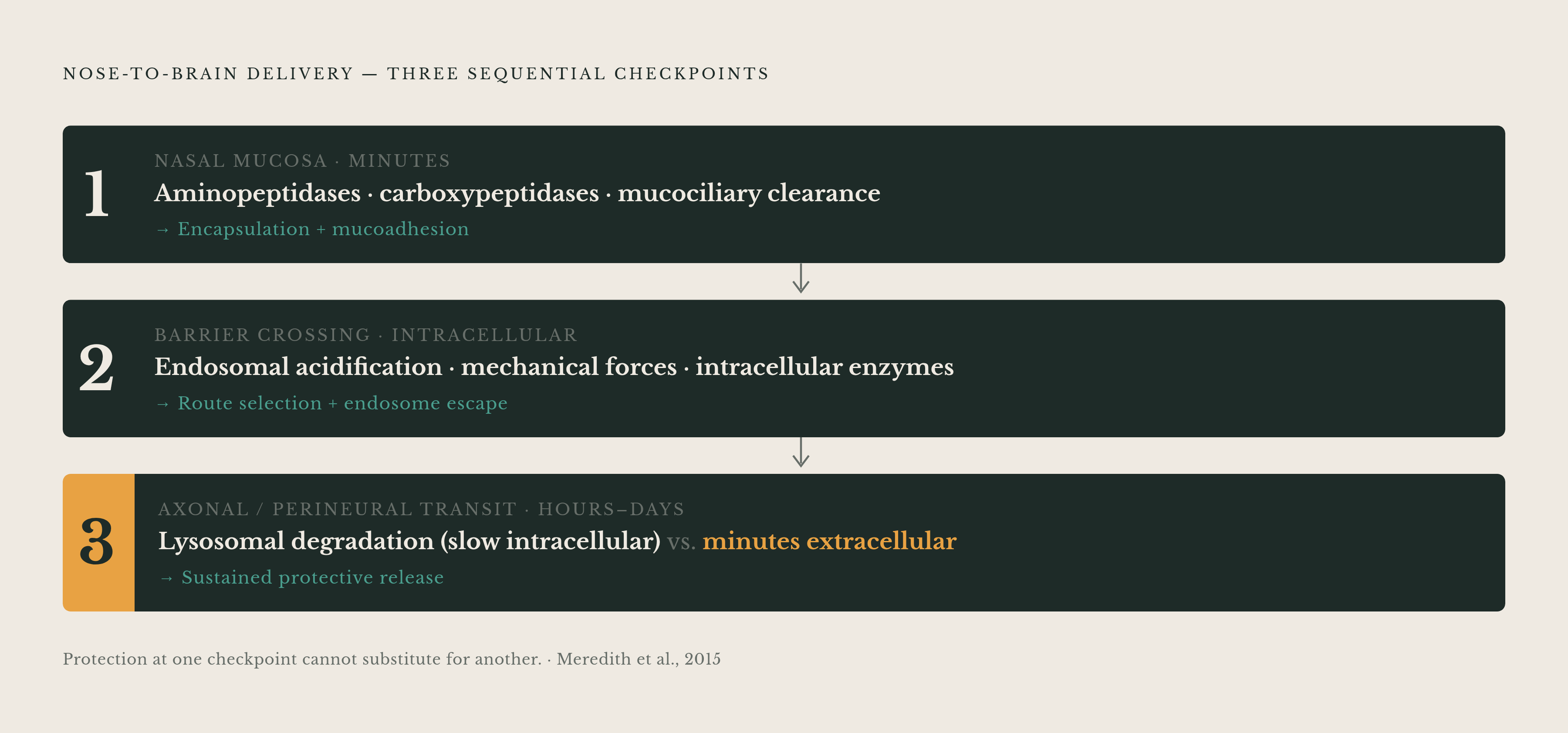
Endocytic uptake, intracellular trafficking, and vesicle packaging can expose peptides to pH shifts, mechanical forces, and intracellular enzymes. These are distinct from extracellular cleavage at the first checkpoint. A molecule protected against nasal proteases may still unfold or aggregate after entering an endosomal compartment.
The route determines which stresses dominate next. Extracellular perineural transport exposes peptides to extracellular ionic and enzymatic conditions but avoids endosomal acidification. Intracellular uptake through receptor-mediated endocytosis or fluid-phase pinocytosis instead places cargo in vesicles whose pH progressively falls along the endolysosomal pathway. Akita et al.’s 2021 study found that a CPP-modified GLP-2 derivative reached the trigeminal sensory nucleus within minutes in mice. That timing supports the feasibility of rapid delivery, though arrival alone does not establish every step taken.
Tight junctions restrict movement between epithelial cells, pushing many peptides toward transcellular routes with their associated stresses. Human anatomy adds a deposition problem. The olfactory epithelium occupies a smaller share of nasal surface area in humans than in rodents, so a standard spray may place much of its payload away from efficient olfactory entry points.
How cell-penetrating peptides and surface-functionalized carriers maintain conformational integrity through barrier crossing
Cell-penetrating peptides can improve uptake while creating a new structural constraint. Attaching a CPP can alter cargo folding, so linker design and attachment chemistry influence more than transport efficiency. The conjugate must retain its therapeutic shape. Akita’s study provided functional evidence by finding antidepressant-like effects after intranasal delivery at doses that failed when administered intravenously.
CPPs themselves remain vulnerable to oxidation, hydrolysis, and enzymatic degradation. Combining them with nanoparticles can protect the conjugate in the nasal environment while retaining membrane-penetrating activity at the uptake surface. Surface functionalization offers another division of labor, allowing uptake-promoting properties at the carrier exterior while a therapeutic payload stays encapsulated. Surface adsorption, as distinct from covalent attachment, can also preserve peptide conformation, although that outcome depends on the particular design.
Permeation enhancers that transiently open tight junctions favor paracellular movement and can avoid the acidification associated with endosomal uptake. Desmopressin’s AV002 formulation grounds this principle clinically, pairing the peptide with a permeation enhancer to more than double bioavailability relative to the conventional spray. That example supports a way to cross the barrier, but it does not prove CNS targeting.
Axonal and perineural transit to the CNS target site as the third conformational checkpoint
An intact peptide at a nerve ending still has distance to travel. Extracellular perineural movement can deliver some molecules to brain tissue within minutes, whereas intracellular axonal transport can take hours to days. The slower route prolongs exposure to acidifying vesicles, lysosomal trafficking, and degradation machinery.
Meredith et al. in 2015 documented rapid arrival of fibroblast growth factor in the olfactory bulb but a delay of hours before distribution to deeper regions. Carrier properties chosen for mucosal uptake therefore have downstream consequences. Particles that remain protective within endosomal vesicles can shield their payload during the slower phase, but the peptide must eventually be released in receptor-competent form.
The July 2025 ghrelin-gold nanoconjugate study reported improved stability and brain uptake relative to free ghrelin, together with neuroprotective effects in an animal model. Human PET studies of intranasal oxytocin and insulin now provide a methodological milestone by demonstrating brain uptake. They do not, however, resolve the conformation of the arriving peptide.
Why GLP-1 peptides make the conformational integrity argument most concrete
GLP-1 peptides sharpen the distinction between neurological promise and effective CNS delivery. Real-world studies comparing millions of people with diabetes linked GLP-1 receptor agonist use to fewer cases of dementia than use of other drug classes, with the strongest link for semaglutide. Preclinical reductions in neuroinflammatory markers provide a coherent mechanistic basis for investigation. Association is not proof of therapeutic efficacy.
The ELAD liraglutide study reported less tissue loss in memory-relevant regions and slower cognitive decline than placebo. The broader randomized evidence in the brief left improvements in memory and cognition unproven, and these differing endpoints measure distinct aspects of neurological benefit. A disappointing functional result also leaves its cause unclear.
Could insufficient receptor-competent exposure explain the gap? Systemic delivery crosses the blood-brain barrier inefficiently, while GLP-1 receptors occupy specific neuronal populations that require regional exposure to a recognizable ligand. Conformational delivery failure could therefore explain the trial outcomes, but this has yet to be shown. A pilot trial pairing oral semaglutide with intranasal insulin in older adults with mild cognitive impairment and metabolic syndrome tests a related delivery rationale while assessing feasibility, safety, cognition, and biomarkers. It does not establish that intranasal GLP-1 treatment works.
What clinical PET evidence and approved neuropeptides reveal about the conformational delivery gap
Winterdahl et al.’s 2025 first-in-human PET study used [¹³N]-labeled oxytocin and found brain uptake within tens of minutes. Levels were low and varied between individuals. Clearance, deposition, and transport offer plausible contributors to that variability, but the imaging result cannot assign it to conformational damage.
The 2025 Wake Forest intranasal insulin study supplied complementary PET evidence for a larger, more conformationally fragile peptide. Insulin’s defined tertiary structure makes the distinction especially useful. Combining imaging with receptor-engagement assays could help connect anatomical exposure to functional delivery. PET alone cannot make that connection.
Semax offers a different kind of clinical precedent. Approved in Russia as a nasal spray since 2011, it was designed for nasal administration, with molecular size and sequence optimized for mucosal absorption and olfactory transport. No nose-to-brain peptide formulation has received FDA approval as of 2026. The remaining methodological gap is a validated way to establish conformational integrity at the CNS target site in humans.
Formulation design principles that address all three checkpoints together
At the mucosa, enzymatic shielding must work with residence extension. During crossing, route selection or endosome escape must limit damaging intracellular exposure. During slower transit, protection must last until the peptide can be released in receptor-competent form. A formulation optimized for one assay may miss another checkpoint entirely.
A carrier must release the cargo it protects to allow receptor engagement, but releasing it too soon exposes the peptide to the hazards the carrier was built to avoid. Controlled release is therefore a conformational tool as well as a pharmacokinetic one. By moderating local peptide concentrations, it can help limit degradation and aggregation-driven misfolding.
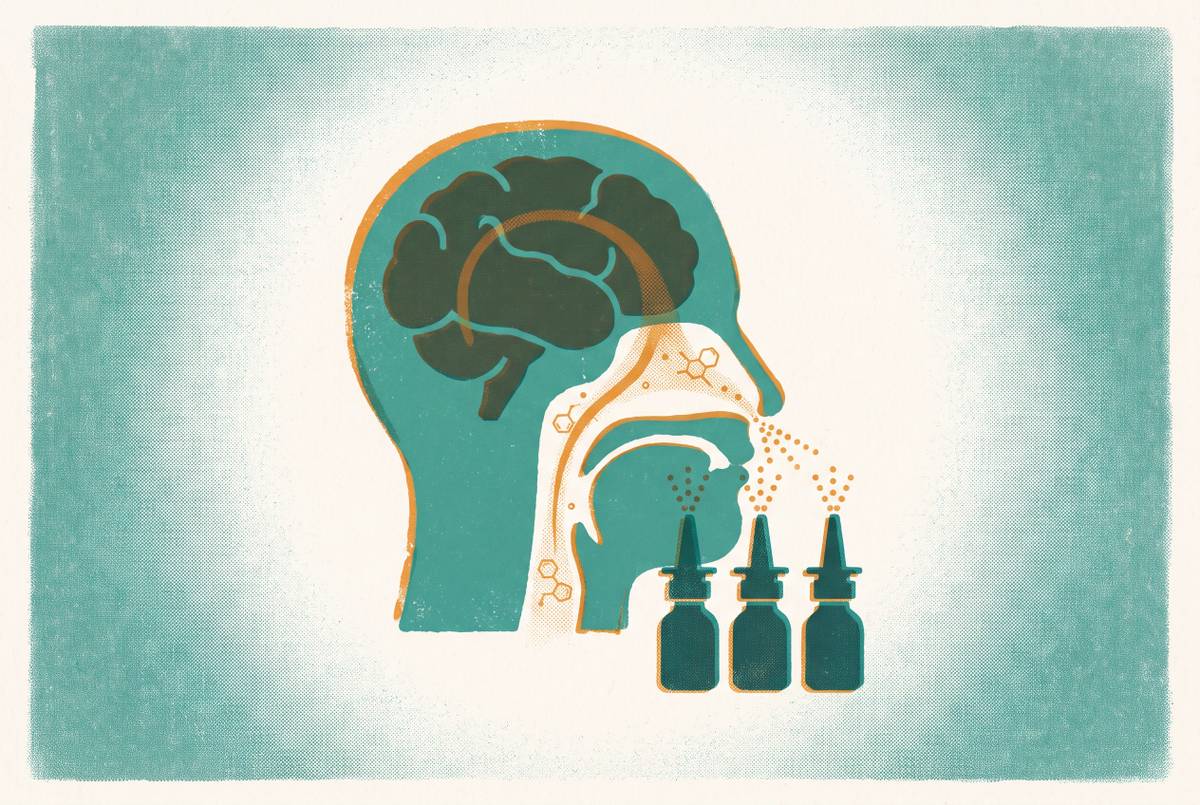
Nanoparticle architectures offer tunable surface chemistry, encapsulation, and release behavior within one system. Those properties still depend on appropriate deposition, which requires attention to spray geometry, droplet size, and patient positioning so that an olfactory-directed formulation reaches the upper nasal vault. Protection cannot compensate for delivery to the wrong location. The platform principle is transferable design logic, with surface chemistry, controlled release, and multi-checkpoint protection adapted across peptide cargoes without rebuilding the engineering rationale from scratch.
Why the adherence case for intranasal delivery is strongest for neurological indications specifically
For patients with cognitive impairment, treatment format can determine access. Cold-chain storage takes planning, injection technique needs fine motor control and cognitive sequencing, and dose timing depends on being able to recall when a dose is due. These demands overlap with abilities that neurological disease can erode. They are not simply expressions of needle preference.
Real-world data showing higher adherence to oral than injectable semaglutide at both 6 and 12 months support the relevance of format. That comparison does not prove that a nasal formulation would produce the same advantage, and oral delivery does not solve CNS targeting. Gastrointestinal adverse events add another potential obstacle to prolonged GLP-1 treatment. A nasal route cannot be assumed to remove that burden without evidence.
A metered intranasal formulation stable at room temperature could remove injection technique and cold-chain handling from the treatment routine. It would still require reliable administration. For patients with mild cognitive impairment, early Alzheimer’s disease, or addiction disorders, that potential simplification makes structural formulation work an access question as well as a delivery question. A convenient spray becomes a meaningful alternative only when it delivers a peptide that remains capable of acting at its intended CNS target.